



Bogushop Kendo Guide
Complete Keikogi and Hakama Maintenance Guide: Instructions, Examples and Explanations
Learn all about Keikogi and Hakama Mainenance. What is invovled and how to do it.
The Complete Keikogi & Hakama Maintenance Guide
Your Keikogi and Hakama absorb sweat, collect salt and dirt, and are repeatedly folded, tied and worn under Bogu. Proper care keeps them cleaner, preserves the fabric and colour, protects the Hakama pleats and helps your uniform maintain a neat appearance for years of practice.
Read the garment's care instructions first
There is no single washing method that is correct for every Keikogi or Hakama. Traditional cotton, genuine Aizome, cotton-polyester blends and modern jersey fabrics behave differently. When the manufacturer's care label differs from general advice, follow the instructions supplied with your garment.
The Most Important Maintenance Happens Before Washing
Sweat and moisture left trapped inside a folded Keikogi or Hakama create odour and encourage deterioration. The easiest way to extend the life of your uniform is also the simplest: take it out of your bag and let it dry after practice.
Never leave a wet uniform sealed in your bag
A Keikogi may be very wet after a hard practice even when it does not appear soaked from the outside. A Hakama can also collect perspiration around the waist, koshiita and himo. Leaving either garment compressed in a closed bag allows moisture and odour to remain in the fibres.
A good habit takes less than a minute
When you arrive home, unpack your uniform immediately. Hang the Keikogi open and, if the Hakama is damp, unfold or hang it until dry before putting it away.
First Identify What Your Uniform Is Made From
The biggest maintenance mistake is treating every Kendo uniform the same way. The correct method depends heavily on the fibre and dye.
Cotton Keikogi
Cotton absorbs sweat very well, but it can shrink, wrinkle and fade more readily than modern synthetic fabrics.
Cold water and air drying are the safest general approach.
Aizome Indigo Cotton
Genuine indigo is expected to release colour, especially when new. The appearance gradually develops as the garment is worn and washed.
Wash separately and avoid aggressive washing, bleach and strong heat.
Jersey / Synthetic
Modern performance Keikogi are generally lighter and faster drying. They usually tolerate washing more easily than traditional indigo cotton.
Still use cool water and avoid unnecessary heat.
Cotton Hakama
Cotton Hakama require the most attention because both the fabric and the pleats can change during washing.
Hand washing is the conservative method, particularly for Aizome-dyed Hakama.
Tetron / Blended Hakama
Polyester and cotton-polyester Hakama are easier to maintain and generally hold their shape better than traditional cotton Hakama.
Many can be gently machine washed when properly folded and protected.
Stitched Pleats
Stitching along the pleats helps prevent them from disappearing during normal wear and washing.
The Hakama should still be properly folded rather than simply stuffed into a bag.
| Material | Machine wash? | Water | Dryer? | Main concern |
|---|---|---|---|---|
| Aizome cotton Keikogi | Hand wash safest | Cold / cool | Avoid | Fading and shrinkage |
| Regular cotton Keikogi | Gentle if permitted | Cold | Avoid high heat | Shrinkage |
| Jersey / synthetic Keikogi | Usually yes | Cold | Air dry preferred | Heat damage / odour buildup |
| Aizome cotton Hakama | Hand wash preferred | Cold / cool | No | Indigo colour and pleats |
| Tetron / polyester Hakama | Usually yes | Cold / gentle | Air dry preferred | Keeping pleats aligned |
How to Wash a Keikogi
Unlike the Hakama, the Keikogi directly absorbs a large amount of perspiration. It should therefore be cleaned regularly rather than simply aired indefinitely.
Do not automatically use bleach
Bleach can seriously affect dyed fabric and should not be used on an indigo Keikogi. Always check the care instructions before using stain removers or whitening products.
Caring for Aizome Indigo-Dyed Keikogi & Hakama
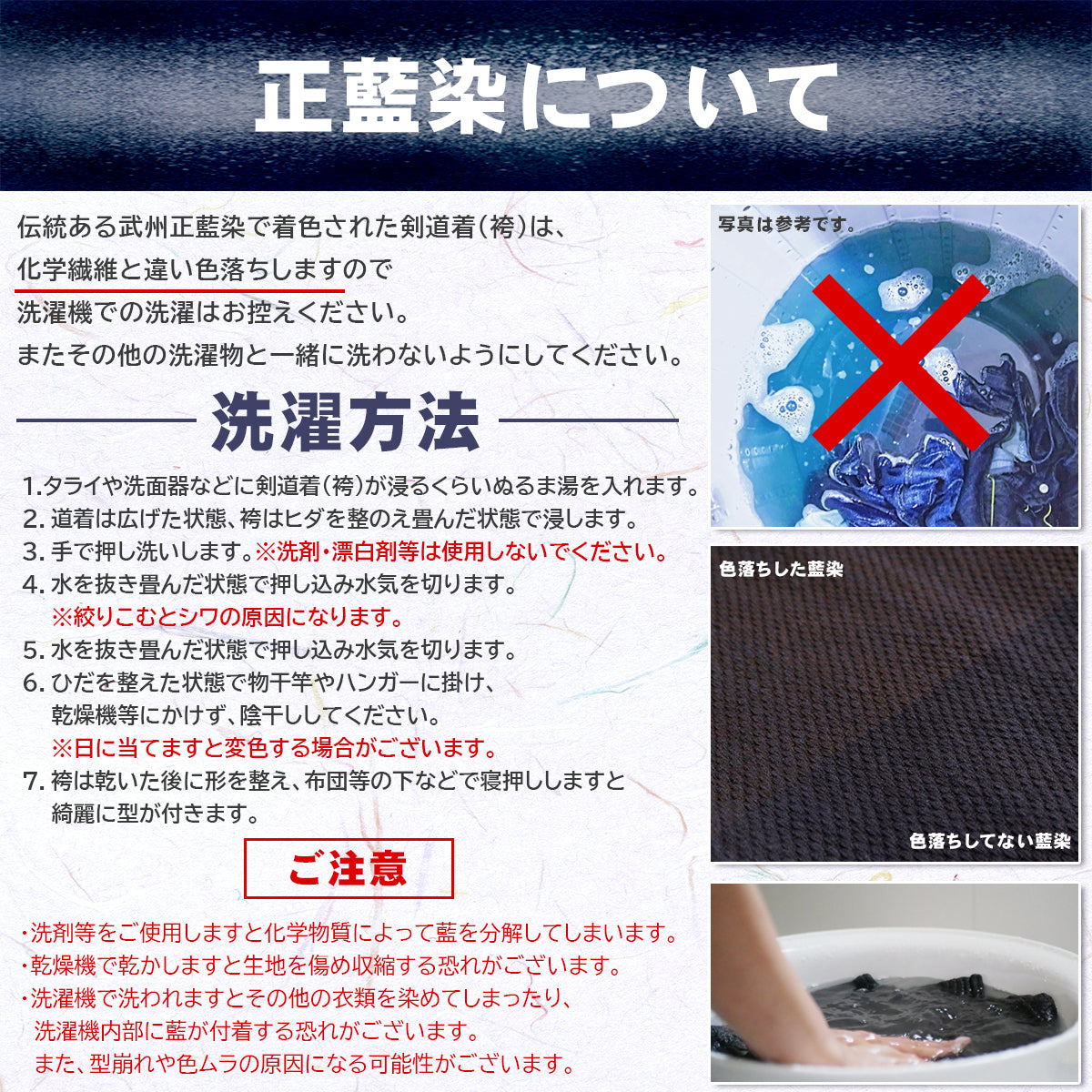
Genuine Aizome is not intended to behave like colourfast synthetic fabric. Some blue transfer and gradual fading are normal characteristics of traditional indigo-dyed Kendo equipment.
Expect some colour transfer
A new Aizome garment may leave blue colour on your hands, skin or other equipment. It can also release considerable colour into the water during early washes.
This does not automatically mean that the garment is defective. Indigo develops its appearance through use, washing and age.
Wash Aizome separately
Do not put a new indigo Keikogi or Hakama into a mixed load with light clothing. Dye transfer can occur both to other garments and to washing surfaces.
Avoid aggressive chemicals
Strong detergents and chlorine bleach can remove colour unnecessarily. When detergent is required, use a small amount of a mild product suitable for dark or delicate fabrics, unless the maker specifies otherwise.
What about vinegar or salt?
You will find many traditional recommendations suggesting vinegar or salt to help reduce indigo loss. These methods are common in Kendo circles, but recommendations differ between manufacturers. They should not be treated as a requirement for every modern Aizome garment. Follow the instructions supplied by the maker of your uniform.
How to Wash a Hakama Without Losing the Pleats
Washing the fabric is only half the job. With a Hakama, you are also maintaining its structure. Keeping the pleats aligned before, during and after washing is extremely important.

Traditional cotton Hakama
The conservative method is to wash a cotton Hakama by hand in cool water while keeping the pleats organized. Press water through the fabric rather than twisting or aggressively scrubbing it.
Synthetic or blended Hakama
Many Tetron, polyester and blended Hakama can be washed on a gentle cycle. Carefully align the pleats first and use a large laundry net to prevent the himo and pleats from moving excessively.
Permanent or stitched pleats
Stitched pleats make maintenance much easier because the folds are physically held in position. They still benefit from careful washing and proper folding, but the risk of completely losing the original fold lines is much lower.
Protecting the Hakama Pleats
The characteristic appearance of the Hakama depends on its folds. Once an unstitched cotton Hakama has dried with the wrong crease, restoring the original pleats can become difficult.
✓ Do
- Find all pleats before washing.
- Smooth each fold with your hands.
- Keep the pleats aligned while the fabric dries.
- Fold the Hakama after every practice.
- Store it flat or neatly folded.
✕ Avoid
- Stuffing the Hakama into an equipment bag.
- Leaving it wet and crumpled overnight.
- Wringing or twisting wet fabric.
- Allowing the himo to tangle during washing.
- Drying it with the pleats misaligned.
Correct the pleats while the Hakama is still damp
Damp fabric is easier to guide back into its intended fold. Run your hands down the length of each pleat and make sure the fold continues cleanly from the waist toward the hem.
Drying the Uniform Correctly
Heat may save time, but it can also shrink cotton, accelerate colour loss and make maintaining the Hakama more difficult. Air drying is the safest general method.
Keikogi
- Open the Keikogi fully rather than leaving it folded.
- Straighten the collar, sleeves and hem.
- Use a strong hanger or drying rack.
- Give air access to the inside of thick double-layer fabric.
- Keep traditional indigo garments away from intense direct sunlight.
Hakama
- Arrange every pleat before hanging.
- Hang from the waist or carefully from the hem using clips.
- Spread the fabric enough for air to circulate.
- Allow the garment to hang naturally rather than twisting it.
- Check the pleats again partway through drying.
Never put an Aizome cotton Hakama in a hot dryer
High heat can create shrinkage, hard wrinkles and loss of colour. For traditional Hakama, there is very little benefit to taking that risk.
Folding Is Part of Maintenance
Folding a Hakama is not only about making it small enough to put into a bag. Correct folding restores the pleats after every practice and prevents random creases from becoming permanent.
Stitched pleats make this easier — they do not make folding unnecessary
Permanent-pleat Hakama are much more forgiving, but repeatedly storing one crumpled will still introduce wrinkles into the surrounding fabric and himo.
For a detailed visual sequence, see our Complete Hakama Guide .
Dealing With Sweat, Salt Marks and Odour
Kendo creates a lot of perspiration. Waiting until a garment smells strongly before doing anything about it makes cleaning more difficult and leaves sweat salts in the fabric longer than necessary.
White salt marks
Pale marks around the collar, back and underarms are often dried perspiration. Regular washing and thorough rinsing help prevent this buildup.
Persistent odour
Odour usually means that moisture and organic residue are remaining in the fabric. Wash the garment rather than trying to cover the smell with perfume or fabric spray.
Small local stain
Spot cleaning can sometimes avoid washing the entire garment, but test any cleaning product carefully first — especially on natural indigo.
Be careful with stain removers on Aizome
A product may remove the stain and the indigo around it at the same time, leaving a much more visible pale patch.
Inspect for Wear Before Small Problems Become Large Ones
Uniform maintenance is not only washing. Periodically inspect the areas that experience repeated tension and friction.
Keikogi Collar
Look for thinning fabric, torn stitching and worn edges where the collar is repeatedly pulled and tied.
Underarms
Movement and perspiration place additional stress around the arm seams.
Side Vents
Check the ends of the side openings where repeated movement can begin pulling the seam apart.
Hakama Himo
Look for fraying, damaged stitching or thinning where the straps are repeatedly tied.
Koshiita
Check the back support for unusual bending, cracking or separation from the surrounding fabric.
Hakama Hem
A Hakama worn too long can repeatedly contact the floor, causing premature wear around the lower edge.
Repair loose stitching early
A small section of loose stitching is much easier to repair than a long seam that has completely opened. Address wear before the surrounding fabric begins tearing.
A Practical Keikogi & Hakama Care Routine
Maintenance does not need to be complicated. Consistent small habits matter more than occasional aggressive cleaning.
Air & Fold
- Remove uniform from bag
- Dry damp fabric
- Restore Hakama pleats
- Fold before storage
Wash
- Wash Keikogi before odour builds up
- Wash Hakama when needed
- Use method appropriate to material
- Air dry completely
Inspect
- Check stitching
- Inspect himo
- Inspect hem
- Check koshiita
Keikogi & Hakama Maintenance FAQ
How often should I wash my Keikogi?
There is no universal number of practices. Climate, practice intensity and fabric all matter. A Keikogi sits directly against the body and should be washed regularly. Do not wait for heavy odour or visible salt buildup.
Do I need to wash the Hakama after every practice?
Usually not. A Hakama does not sit against as much of the upper body as the Keikogi does. Air it thoroughly after practice and wash it when sweat, dirt or odour indicates that cleaning is needed.
Why are my hands turning blue?
New genuine Aizome equipment can transfer indigo, particularly when damp. Some blue transfer is normal and generally decreases with repeated use and washing.
Can I wash my Hakama in a washing machine?
It depends on the Hakama. Synthetic and blended Hakama are often machine washable on an appropriate gentle setting. Traditional Aizome cotton Hakama are safer hand washed. Always check the manufacturer's instructions.
Can I put my Keikogi in the dryer?
Air drying is the safest default, particularly for cotton garments. Heat can shrink cotton and can accelerate deterioration or fading.
Can I iron my Hakama?
Prevention is better than ironing. Correct the pleats while damp and fold the Hakama properly after drying. Excessive heat can affect fabric and may create shiny areas on some materials. If ironing is permitted by the garment manufacturer, use the appropriate fabric setting and take special care with the pleats.
My Hakama pleats disappeared. Is it ruined?
Not necessarily, but reconstructing the folds can be difficult if you are unfamiliar with the original layout. Compare it with another correctly folded Hakama or ask an experienced instructor for help before pressing new creases into the fabric.
Should I wash a new Aizome uniform before wearing it?
Recommendations vary between manufacturers. Some makers recommend an initial rinse or soak while others provide specific instructions for their dye process. Follow the instructions supplied with the garment rather than assuming every Aizome product requires the same pre-treatment.
The three rules worth remembering
1. Never leave a wet Keikogi or Hakama trapped in your equipment bag.
2. Know whether your garment is cotton, Aizome, blended or synthetic before washing it.
3. Protect the Hakama pleats every time you wash, dry, fold and store it.
Continue learning
Proper maintenance starts with understanding your equipment. See the Complete Keikogi Guide , the Complete Hakama Guide and our Complete Shinai Maintenance Guide .
Customer Service

Incorporated in 2007, Bogushop has been providing quality Kendo equipment all around the world ever since. Read More
Contact Us
Please call us by:
Phone: (604)303-0033
Email: customercare@bogushop.com
In Person: Book an appointment
Connect with Us

