



The Complete Hakama Guide
Understand the fabric, pleats, weight, fit and care behind kendo hakama—from easy-care everyday blends to substantial indigo cotton.
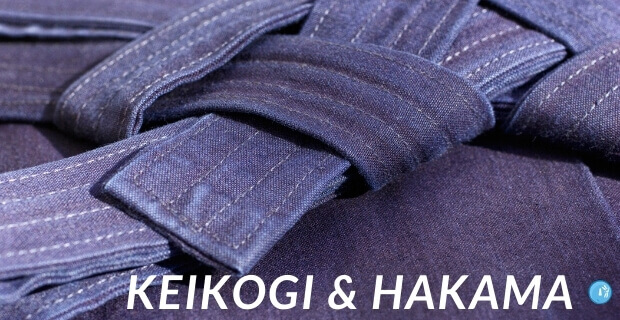 Traditional form, practical movement
What Makes a Kendo Hakama?
A kendo hakama is a divided, pleated garment worn over the keikogi. It creates a composed silhouette while allowing the long steps, lunges and sliding footwork used in kendo.

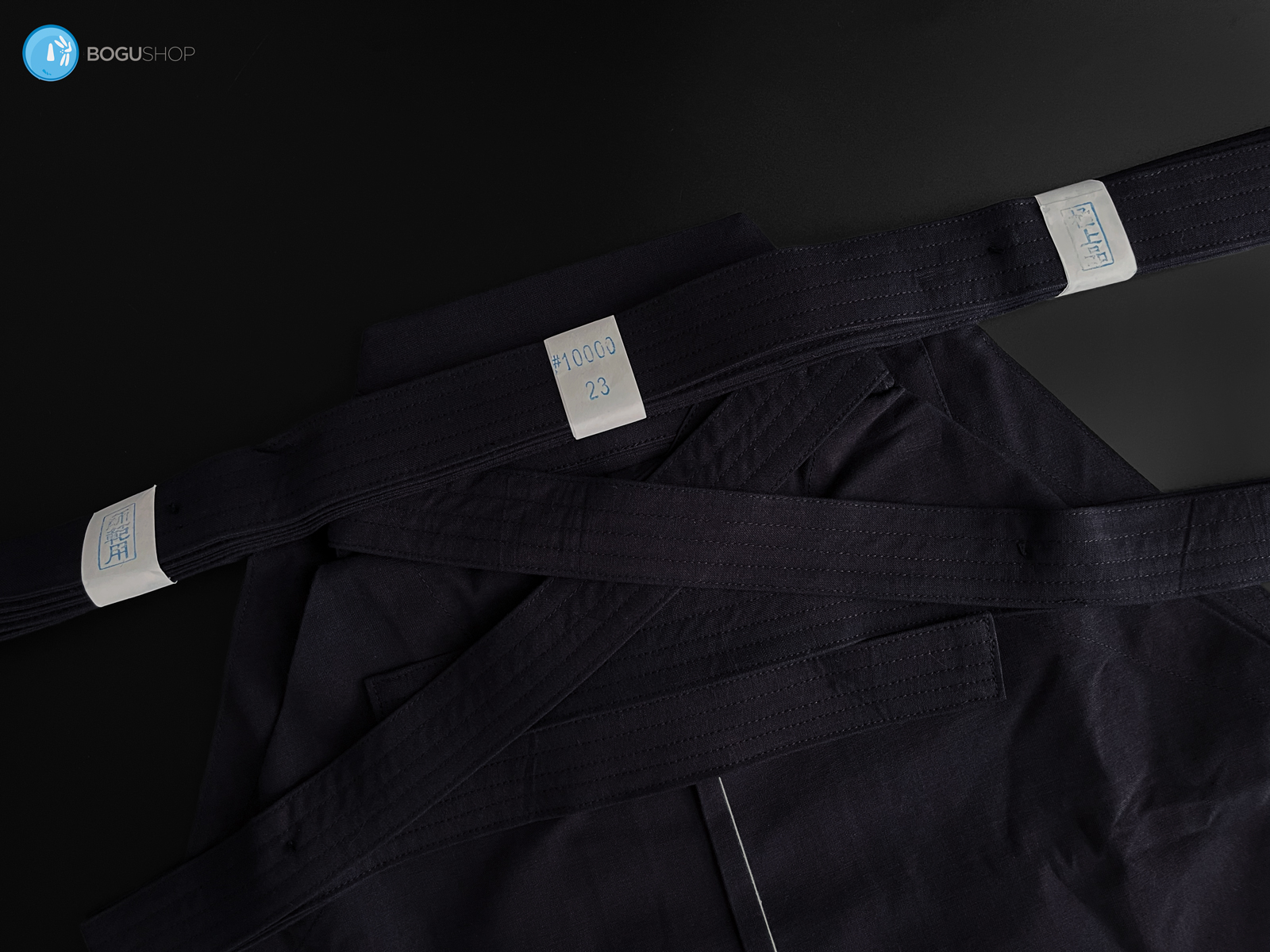
Himo
The long waist straps secure the hakama. The front and rear pairs are tied in sequence so the garment stays stable during movement.
Koshiita
The firm rear panel keeps the back of the hakama upright and helps create its clean shape. It should sit flat rather than bow outward.
Hera
Many kendo hakama have a small tab or “spoon” below the koshiita. It slips behind the keikogi or front straps to help anchor the back.
Side openings
The openings give the hips room to move. The keikogi should remain properly overlapped and tucked so skin is not exposed.
Divided legs
Although it resembles a skirt from the outside, a kendo hakama has two legs. This construction supports free footwork and a stable stance.
Pleats
The folds control volume and create the straight lines associated with proper kendo dress. Stitched pleats are easier to restore after washing.
Quick Hakama Comparison
These are useful tendencies. The exact weave, cut and finishing can make two hakama with similar labels feel different.
| Type | Feel & drape | Best suited to | Main strength | Main trade-off |
|---|---|---|---|---|
| T/C blend65% tetron / 35% cotton | Light, smooth and moderately structured | Beginners and regular keiko | Affordable, durable and faster-drying | Less traditional hand-feel than all-cotton |
| Lightweight polyesterPermanent pleats | Very light, soft and slightly flexible | Hot dojo, travel and frequent laundry | Easiest pleat care and fastest turnaround | Lighter drape and synthetic feel |
| #7000 cottonStitched pleats | Traditional cotton with medium substance | Keiko, shiai and grading | Indigo appearance plus easier pleat care | Slower drying and initial dye transfer |
| #8000 cottonTraditional mid-heavy fabric | Weighty, absorbent and poised | Traditional everyday or formal wear | Strong drape and cotton character | More laundry and folding care |
| #10000 cottonHeaviest Bogushop option | Most substantial, crisp and formal | Experienced users wanting premium weight | Deep structure, absorption and presence | Warmest, slowest to dry and most demanding |
Explore Each Type in Detail
Each section separates what the hakama physically is from the reason someone might choose it. The advantages and trade-offs are equally important.
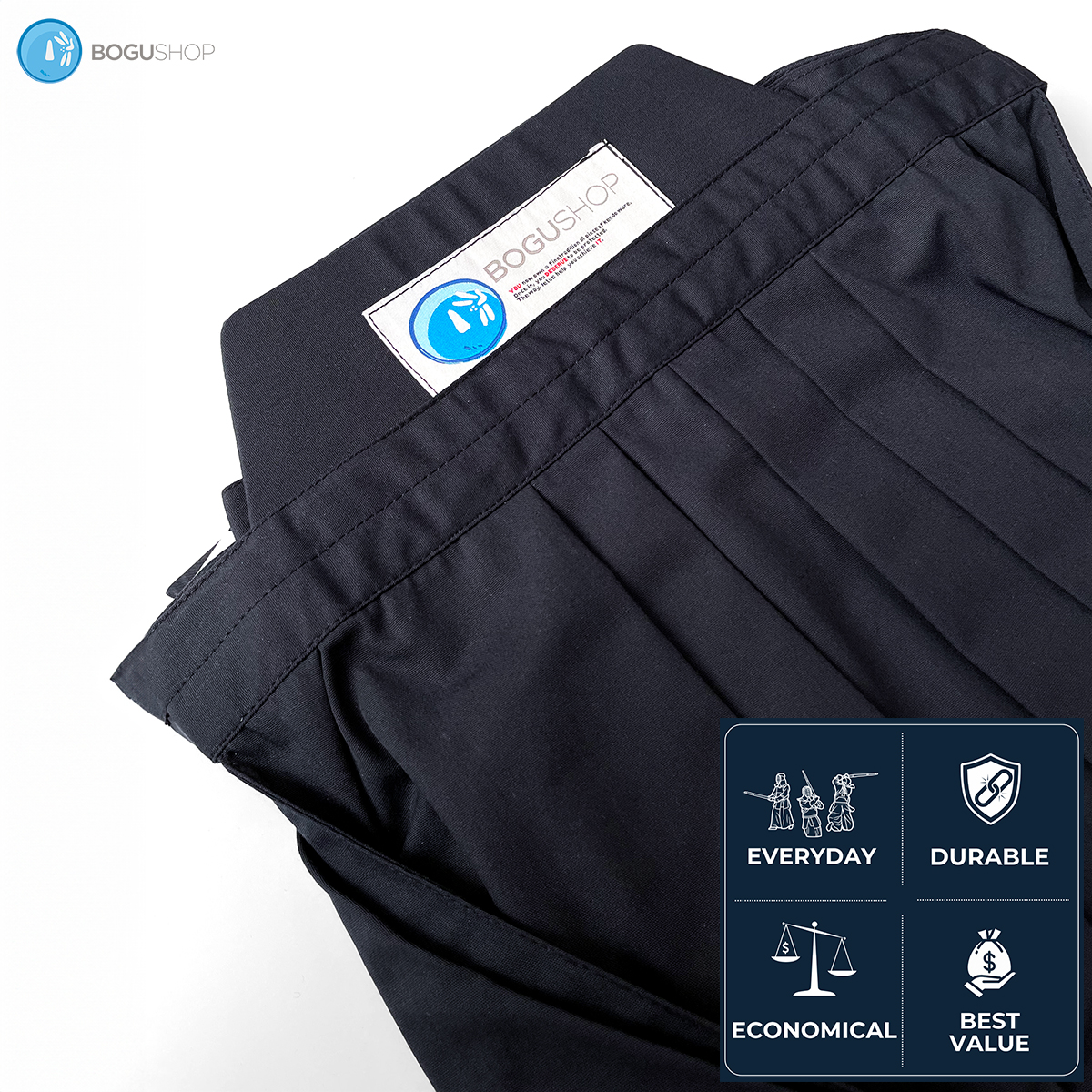
T/C Tetron & Cotton Blend
The practical starting point: lighter and easier to maintain than traditional cotton, with enough cotton content to soften the feel.
What it is: Bogushop’s T/C hakama combines 65% tetron with 35% cotton. It is lightweight, wrinkle-resistant and designed to retain its pleats with less work than a conventional cotton hakama.
Purpose: To give beginners and regular practitioners a durable, economical hakama that can handle frequent practice and dry sooner between sessions.
Advantages
- Affordable all-purpose choice
- Lighter than heavy cotton
- Dries faster than all-cotton
- Pleats are relatively easy to maintain
Trade-offs
- Less substantial traditional drape
- Synthetic content changes the feel
- Lower moisture absorption than all-cotton
- May retain heat or odour if stored damp
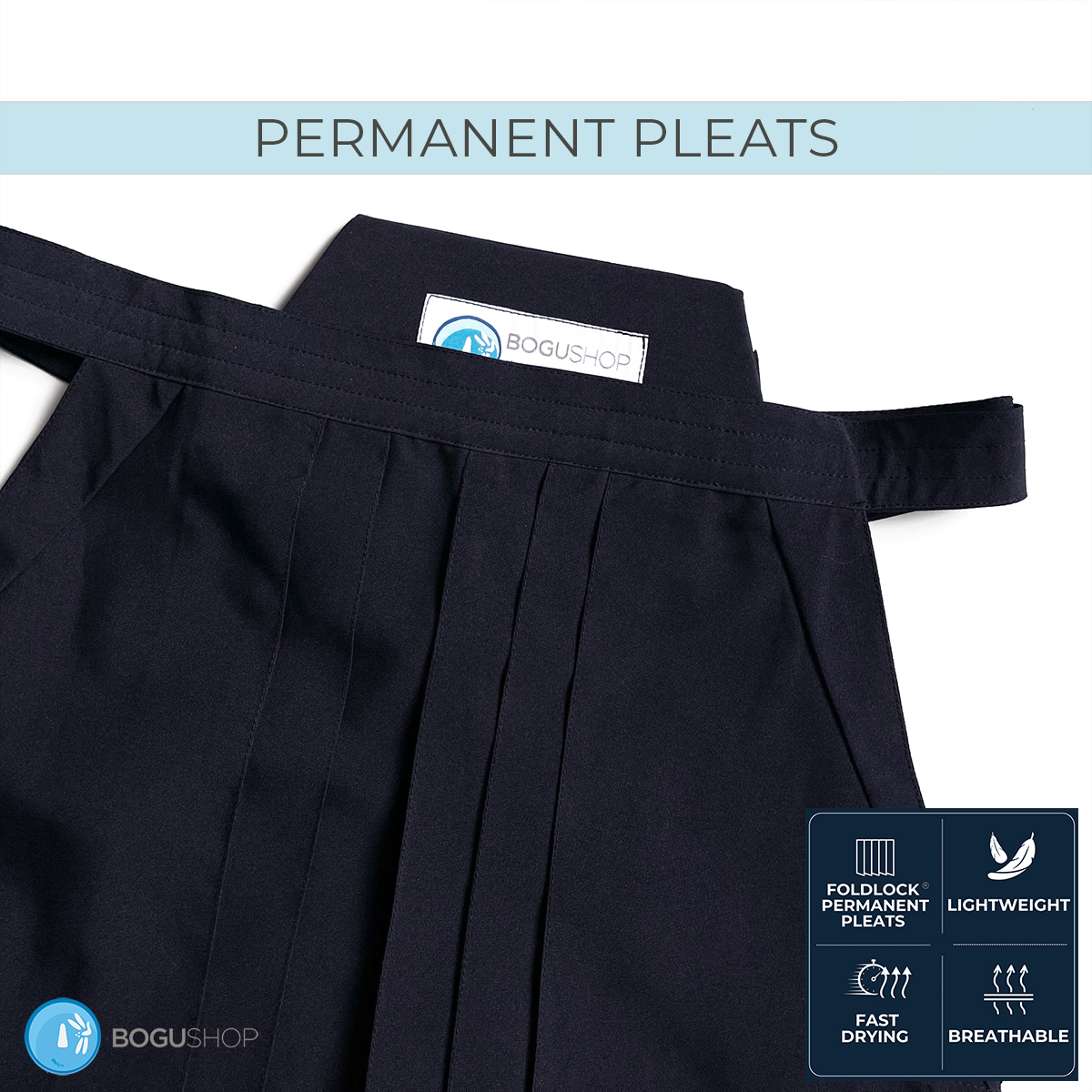
Lightweight Permanent-Pleat Polyester
A light performance hakama for practitioners who value cooling, easy laundry and reliably sharp folds.
What it is: A breathable polyester hakama with double-stitched permanent pleats. The fabric is soft, wrinkle-resistant and has slight flexibility for comfortable movement.
Purpose: To reduce the time spent restoring pleats and waiting for a hakama to dry. It is especially useful for frequent training, seminars and warm conditions.
Advantages
- Very light and quick-drying
- Permanent pleats simplify folding
- Wrinkle-resistant for travel
- Available in blue, black and white
Trade-offs
- Least traditional fabric feel
- Lighter fabric has less weight in motion
- Does not absorb like cotton
- Confirm black or white with your dojo

#7000 Cotton with Permanent Pleats
A useful middle ground: genuine indigo cotton appearance with stitched pleats that help preserve the shape.
What it is: A 100% indigo-dyed cotton hakama made from #7000-grade fabric. Stitching follows the pleat lines so the folds are easier to find again after wear and careful washing.
Purpose: To provide the absorption, colour and formal presence of cotton without making pleat maintenance as demanding as a fully traditional unstitched model.
Advantages
- Traditional cotton appearance
- Permanent stitched pleats
- Good balance of weight and mobility
- Suitable for keiko, shiai and grading
Trade-offs
- Slower drying than synthetics
- Indigo may transfer when new
- Still needs careful folding
- More expensive than basic blends
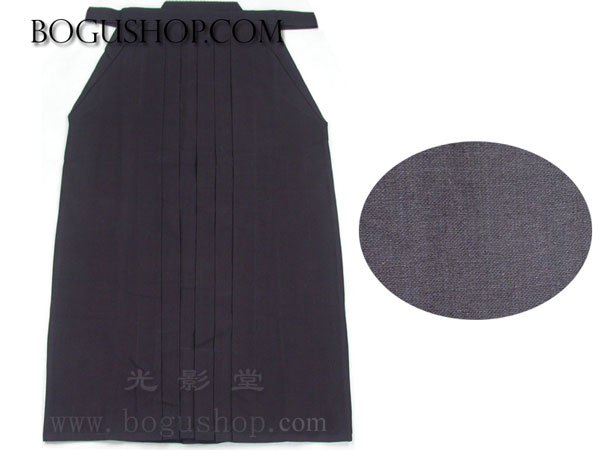
#8000 Indigo Cotton
A heavier traditional option with enough body to hang in straight, composed lines.
What it is: An indigo-dyed, 100% cotton hakama with #8000-grade fabric. Compared with lighter options, the fabric has more weight, absorbs more moisture and gives the pleats greater visual definition.
Purpose: To serve practitioners who prefer the movement, absorption and developing patina of traditional cotton for regular keiko or formal occasions.
Advantages
- Strong traditional drape
- Good perspiration absorption
- Substantial, poised appearance
- Durable with proper care
Trade-offs
- Heavier and warmer
- Longer drying time
- Pleats demand careful alignment
- Natural indigo fades and transfers
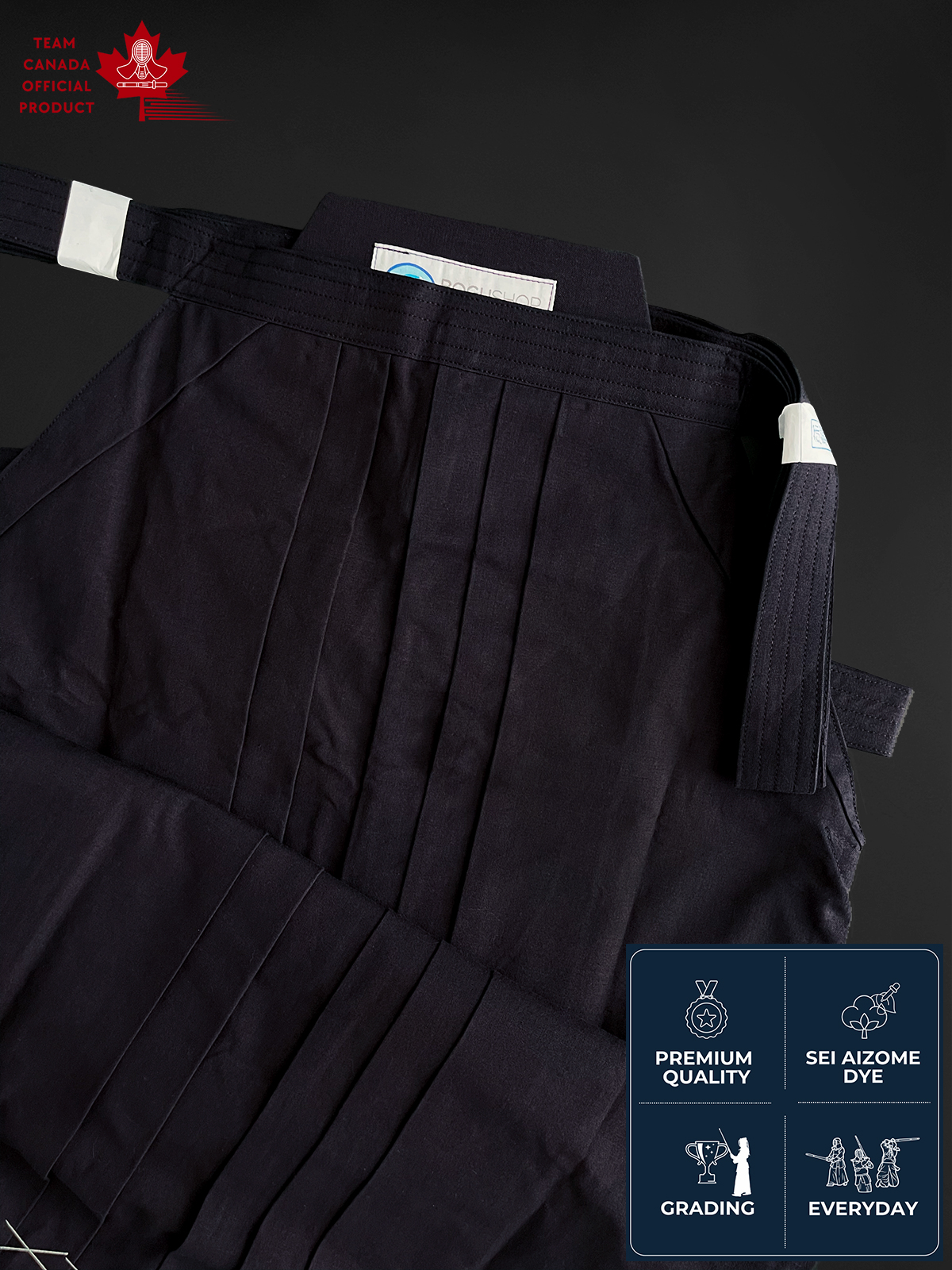
#10000 Premium Cotton
Bogushop’s most substantial cotton option, chosen for a firm silhouette, deep absorption and premium traditional feel.
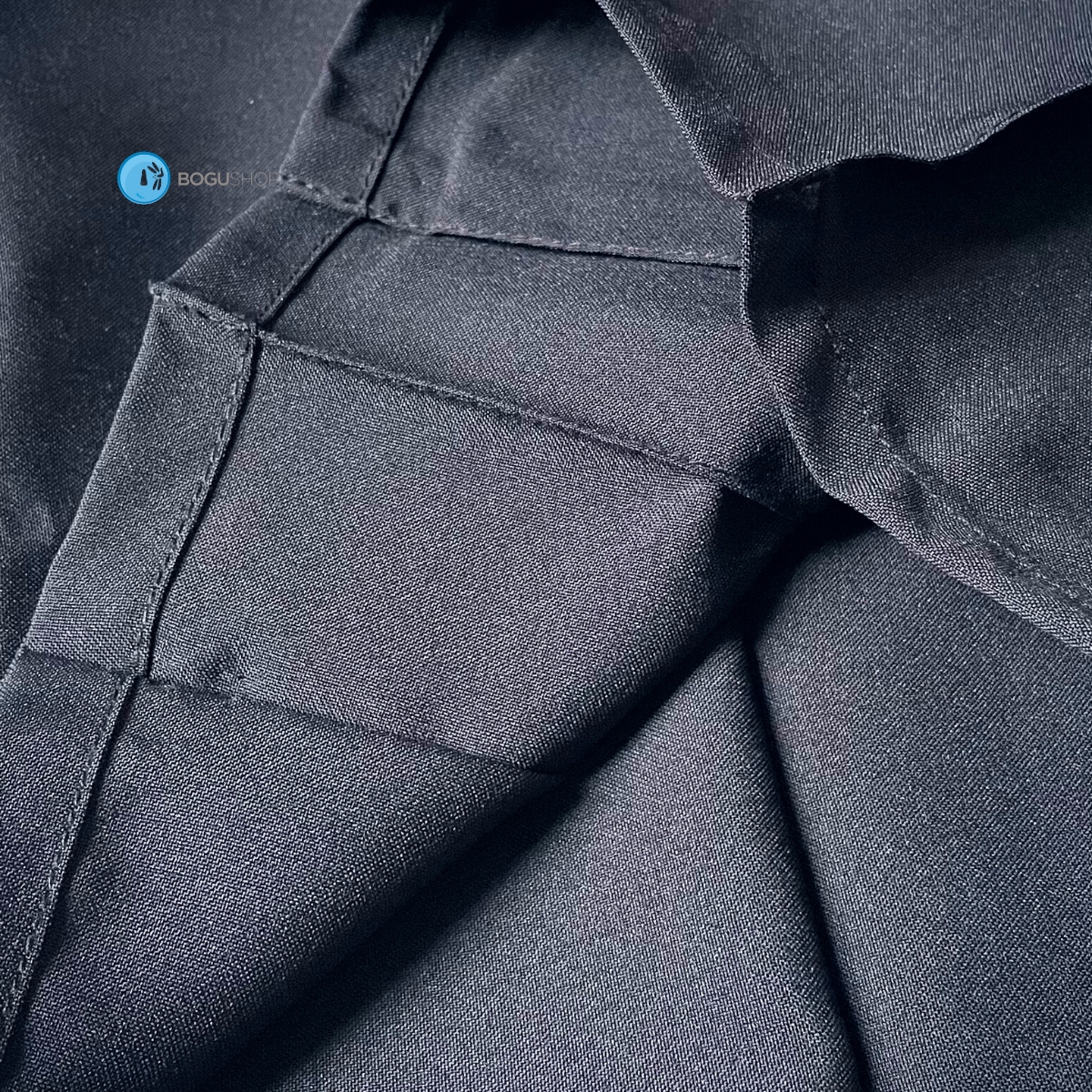
What it is: A 100% cotton hakama made from heavier #10000-grade fabric, offered in blue or white. Its thickness helps the garment hold straight lines and resist casual wrinkling once properly arranged.
Purpose: To give experienced practitioners a premium hakama for keiko, demonstrations, grading or competition when formal presentation and traditional weight are priorities.
Advantages
- Most structured and formal silhouette
- High moisture absorption
- Deep traditional cotton feel
- Can age beautifully with good care
Trade-offs
- Warmest and heaviest option
- Slowest to wash and dry
- Requires disciplined folding
- Blue version can transfer indigo

Choose by Training Situation
Start with how often you practise and how much garment care you realistically want to do.
First Hakama
Choose the T/C blend for a straightforward, affordable start. Choose permanent-pleat polyester when easy laundry is the highest priority.
Hot Dojo or Travel
Lightweight polyester packs smaller and dries fastest. A T/C blend is the next step when you want a little more body.
Frequent Practice
Permanent pleats reduce daily folding work. Owning a second hakama lets one dry fully instead of returning damp to the equipment bag.
Traditional Cotton Feel
#8000 cotton offers substantial weight and absorption. #7000 permanent pleats are easier when you want cotton with simpler maintenance.
Grading or Formal Use
#7000, #8000 and #10000 cotton give a refined silhouette. Cleanliness, correct fit and neat tying matter more than the number alone.
Maximum Structure
Choose #10000 when you specifically want premium weight and a firm line, and accept the extra warmth, drying time and care.
Choose Colour with Context
Colour is partly personal and partly cultural. Your instructor’s expectations should guide the decision, especially for a first uniform or formal event.
Navy Blue
The most widely used kendo choice. Genuine indigo cotton develops lighter high-wear areas over time; synthetic navy generally keeps a more uniform colour.
Black
Common in iaido and accepted in some kendo settings, but not universal. Confirm with your dojo before choosing black for regular kendo practice or grading.
White
A legitimate traditional option used in some groups and contexts. It shows marks quickly and should be approved by your dojo before purchase.
Correct Length Comes Before Fabric
A premium hakama in the wrong size can interfere with footwork. Use the product chart as the starting point, then check the waist, strap length and finished hem position.
Before ordering
- Use your height to find the starting size on Bogushop’s hakama chart.
- Provide your waist and weight when the product page requests them; body shape can affect how the hakama hangs.
- The himo must be long enough for your dojo’s tying method. A strap extension is available for selected models.
- If you already own a well-fitting hakama, compare its finished length with the product chart.
- Check whether embroidery or custom sizing makes the item non-returnable before ordering.
When trying it on
- The front top edge should sit securely at the abdomen, with the rear panel lying flat.
- The hem should appear even and remain safely clear of the floor and heel during normal footwork.
- The side openings should not pull sharply forward or flare excessively.
- The pleats should fall vertically instead of twisting around the legs.
- Test sonkyo, a long step and gentle suriashi before removing any temporary pleat threads.
A Simple Wearing Sequence
Tying customs vary by dojo and body type. Use this as an overview, then follow your instructor’s method.
Step into both legs
Confirm the front panel faces forward and the pleats are not twisted.
Set the front height
Place the top edge securely at the abdomen so the hem clears your feet.
Wrap the front himo
Take the long straps around the body using the method taught by your dojo.
Seat the rear panel
Bring the koshiita flat to the lower back and position the hera if your model has one.
Secure the rear himo
Tie firmly enough to stay in place without restricting breathing or movement.
Check every line
Straighten the side openings, centre the pleats and confirm the hem is even.
Care and Folding Are Part of Wearing Hakama
The care label on the individual product takes priority. These general habits protect the fabric and prevent the pleats from becoming difficult to recover.
After every practice
- Remove the hakama from your equipment bag promptly.
- Hang it where air can reach both sides.
- Smooth each pleat before the fabric dries in a distorted shape.
- Let it dry completely before folding and storing it.
- Never leave a damp hakama compressed with bogu.
When washing
- Wash cold and separately, especially genuine indigo cotton.
- Use a gentle method and only the detergent permitted by the product label.
- Avoid bleach, hot water and heated dryers.
- Realign the pleats while wet and hang dry away from strong direct sun.
- Use low heat only if the garment instructions expressly allow ironing.
The Folding Principle
A formal himo knot can be learned later. The essential skill is preserving the pleat geometry every time.
Lay it flat
Place the hakama front-down or as taught by your dojo, with the legs straight and untwisted.
Restore the back
Follow the two rear folds from waist to hem and smooth the fabric without stretching it.
Restore the front
Turn the garment carefully and align all five front pleats from top to bottom.
Fold the length
Fold the lower section upward in even sections without crushing the koshiita.
Arrange the himo
Straighten each strap before folding or tying it so wrinkles are not stored in place.
Store it dry
Keep the folded hakama in a ventilated area, never while it is still damp from keiko.


