



Bogushop Kendo Guide
Complete Shinai Maintenance Guide: Instructions, Examples and Explanations
Learn all about Shinai Mainenance. What is invovled and how to do it.
The Complete Shinai Maintenance Guide
A shinai is designed to flex and absorb repeated impact, but it must be inspected, adjusted and maintained regularly. Learn how to prepare a new bamboo shinai, remove splinters, replace damaged staves, care for the leather fittings, set the correct tsuru tension and know when a shinai should no longer be used.
A damaged shinai can injure your training partner
Small surface splinters can often be repaired. A genuine crack or split in the bamboo is different. Do not tape over a cracked stave and continue practicing. Replace the damaged stave or stop using the shinai.
Preparing a New Bamboo Shinai
A new shinai may look ready to use, but taking a few minutes to inspect and prepare the bamboo can reduce early splintering and helps you learn how the shinai is assembled.
Disassemble it carefully
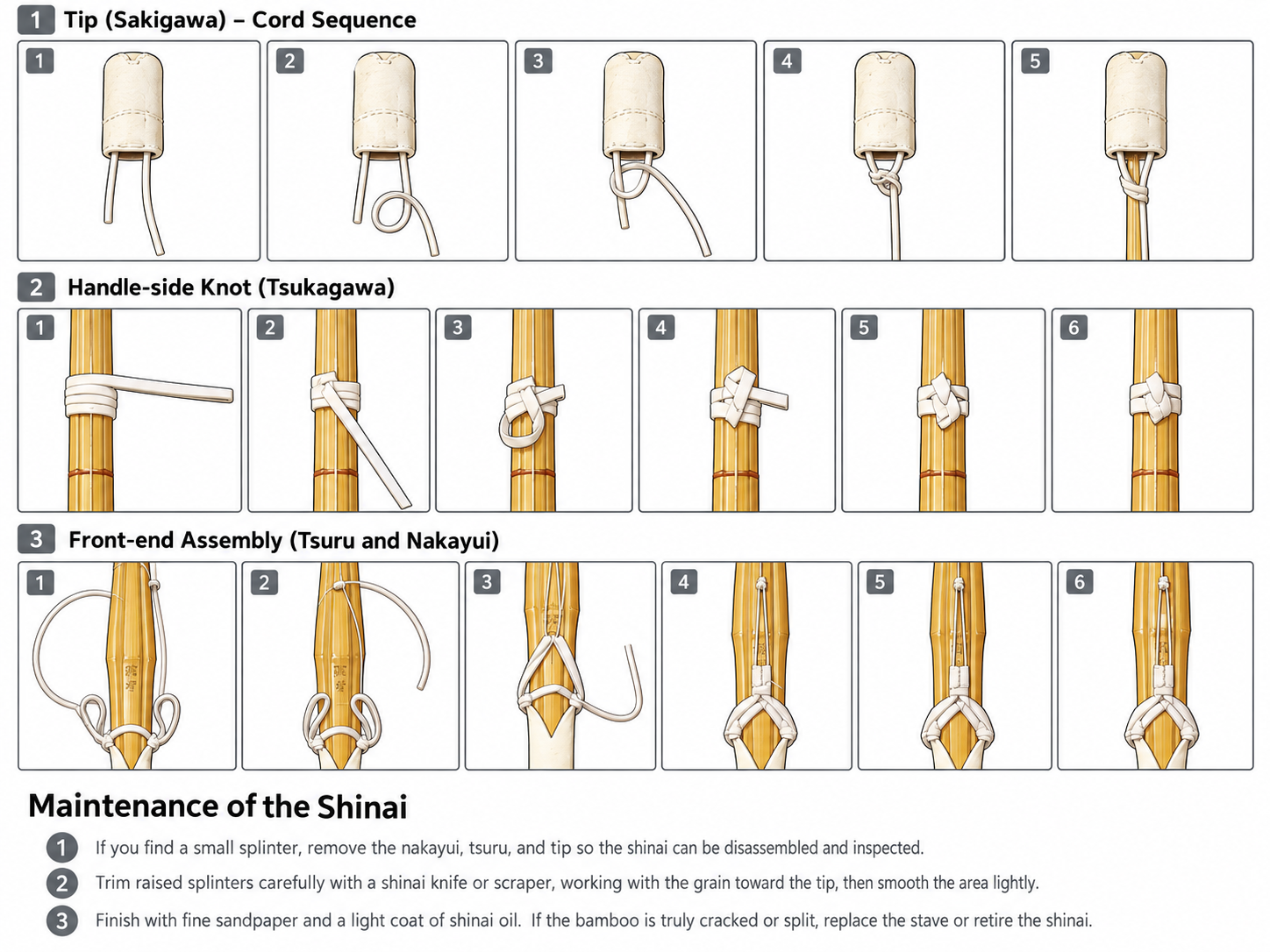
Remove the tsuba and tsubadome first. Untie the tsuru at the handle, then slide the nakayui, sakigawa and tsuru assembly off the shinai. Remove the tsukagawa only if you intend to separate all four bamboo staves.
The small metal piece located inside the handle is called the chigiri. Do not lose it. It helps keep the four bamboo pieces aligned at the handle.
When the shinai is apart
- Inspect all four staves under good light.
- Look for cracks, deep fibres, chips or manufacturing damage.
- Check the edges where neighbouring bamboo staves contact each other.
- Check that the bamboo nodes are intact.
- Check the sakigawa, nakayui, tsuru and tsukagawa for defects.
Round the sharp contact edges
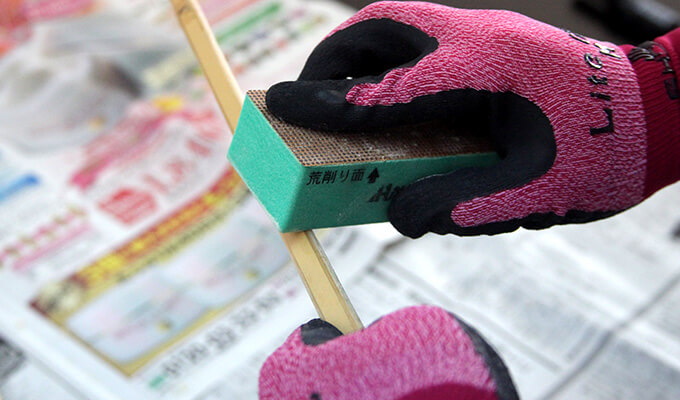
The inside edges of a new bamboo stave can be relatively sharp. Very lightly smoothing these edges reduces the chance that the fibres catch against each other and begin to fray during impact.
Use fine sandpaper or a shinai sanding block. The goal is only to soften the sharp edge, not to noticeably change the shape or thickness of the stave.
Do not over-sand
The bamboo nodes and contact surfaces are part of the shinai's structure. Removing unnecessary material can weaken the stave or alter how the four pieces work together.
Condition dry bamboo
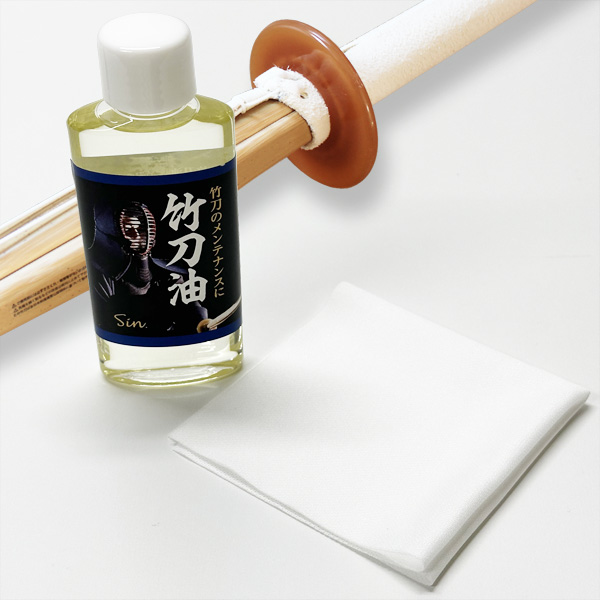
Bamboo that becomes excessively dry is more likely to develop raised fibres and splinters. A small amount of shinai oil can be applied to clean bamboo, particularly when the shinai feels very dry.
Walnut-based shinai oil is a convenient option. Apply a light coat with a cloth, allow it to absorb and wipe away excess oil before reassembly. More oil is not automatically better.
Oil and wax do different jobs
Oil conditions dry bamboo. After repairing a small surface splinter, a light application of wax or appropriate shinai-care product can reduce friction and leave the repaired surface smooth.
The 30-Second Shinai Safety Check
Inspection should become part of preparing for keiko, just like tying your Men. Run your eyes and hands along the shinai before practice and check it again whenever you hear or feel something unusual.
Look for raised fibres, splinters, cracks and unusual gaps.
Check for holes, worn leather or opening seams.
Confirm that it is secure and properly tensioned.
Make sure it is firmly tied and has not moved.
Look for splitting seams, holes or excessive twisting.
Make sure the handguard is secure and does not slide.
Check again after using a new shinai
Leather and cord fittings can stretch slightly during the first practices. A new shinai that was correctly assembled yesterday can have a looser tsuru after its first keiko.
Splinter, Deep Splinter or Crack?
Not all damage should be treated the same way. The most important maintenance skill is knowing when a repair is reasonable and when the stave should be replaced.
Small raised fibre
A shallow surface fibre or very small frayed area with solid bamboo underneath.
Larger surface splinter
A loose bamboo fibre that protrudes but has not developed into a structural split.
Crack or split
A line running into the stave, deep separation or damage that weakens the bamboo.
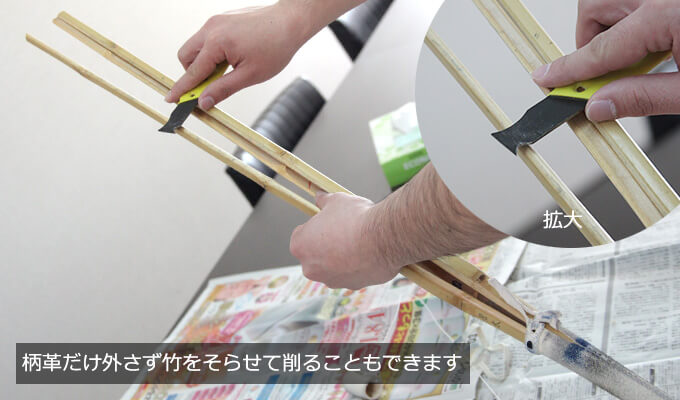
Repairing a minor splinter
Do not tape over damaged bamboo
Tape can hide a crack without restoring the strength of the bamboo. A split stave can continue opening underneath the tape.
Replacing One Bamboo Stave
A shinai does not always have to be discarded because one stave is damaged. Experienced practitioners often keep compatible bamboo pieces from retired shinai and use them as replacements.
Choose a replacement that actually matches
The closer the donor stave is to the original shinai, the better the four pieces will fit together.
Try to match:
- Overall shinai length
- Stave width and thickness
- Handle shape and diameter
- Round versus koban-style grip
- General body profile
- Position of the bamboo nodes (fushi)
- Weight and balance as closely as practical
The Japanese bamboo node is called fushi (節). Using a stave with very different node locations can make fitting and flex inconsistent.
Basic replacement sequence
Do not create a “Franken-shinai” blindly
Mixing unrelated staves may technically fit but can create very different flex, weight and balance between the four sides. Matching shape and dimensions matters more than simply finding a piece of bamboo of the same length.
Why Tsuru Tension Matters
The tsuru is not decorative. Together with the leather fittings, it keeps the shinai assembled and helps hold the sakigawa securely on the tip.
Too loose is dangerous
If the tsuru becomes excessively loose, the sakigawa may no longer be held securely. The entire fitting system can shift during impact.
Too tight is also wrong
Pulling the tsuru as tight as physically possible is not the goal. Excessive tension can begin to bow the shinai.
And yes — it affects the sound
A properly assembled shinai often produces a cleaner, sharper sound when striking because the four staves and fittings are working together properly. However, do not keep tightening the tsuru simply to chase a louder sound. Correct assembly and safety come first.
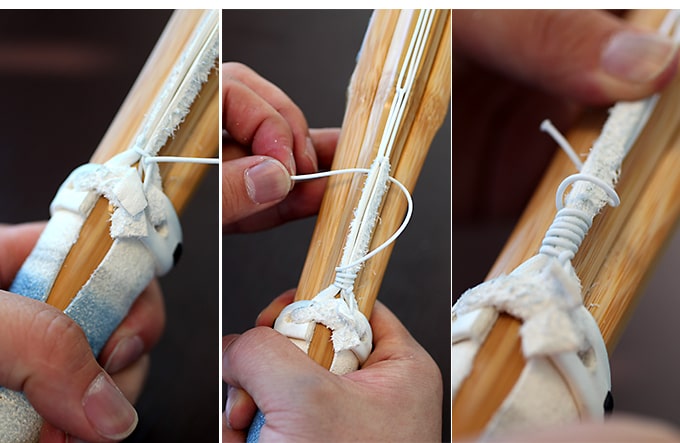
Check the nakayui at the same time
The nakayui should be tightly secured and located approximately one-quarter of the total shinai length from the tip. If it repeatedly slides out of position, re-tie or replace it.
Replacement tsuru and nakayui are inexpensive, so there is little reason to continue using badly frayed fittings.
Replacement Shinai Tsuru Shinai Replacement PartsWhat Is the Rubber Tip Under the Sakigawa?
Hidden inside the leather sakigawa is a small internal tip called the sakigomu. It is an important safety component, not packing material.
What the sakigomu does
- Supports the four bamboo staves at the tip.
- Helps maintain the correct tip shape.
- Provides structure beneath the leather sakigawa.
- Reduces the chance that the bamboo ends collapse inward.
Check that the sakigomu is present, correctly seated and undamaged whenever you remove the sakigawa. Never assemble a normal bamboo shinai without its correct internal tip.
Shop Sakigomu & Sakigawa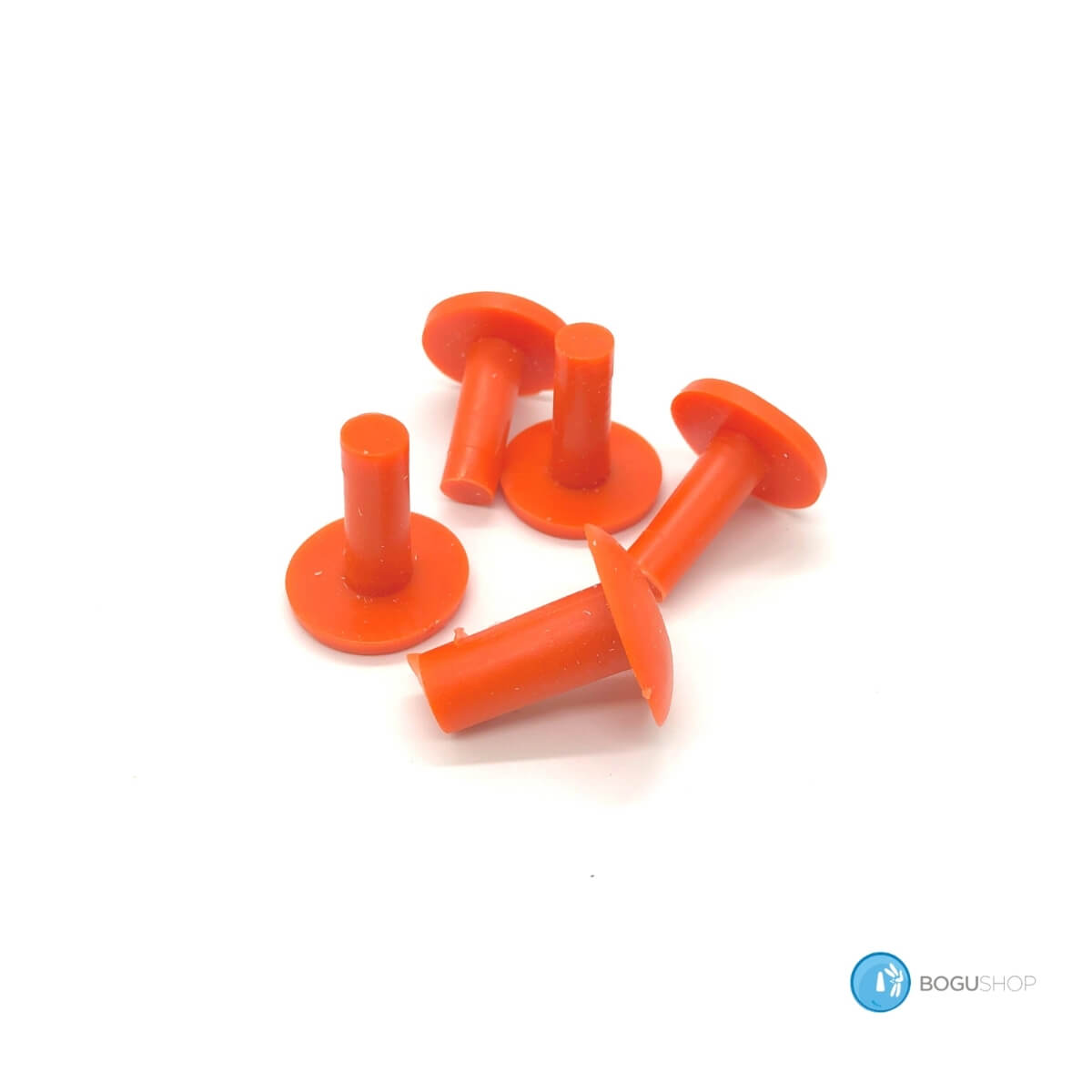
Replacing or Changing the Tsukagawa
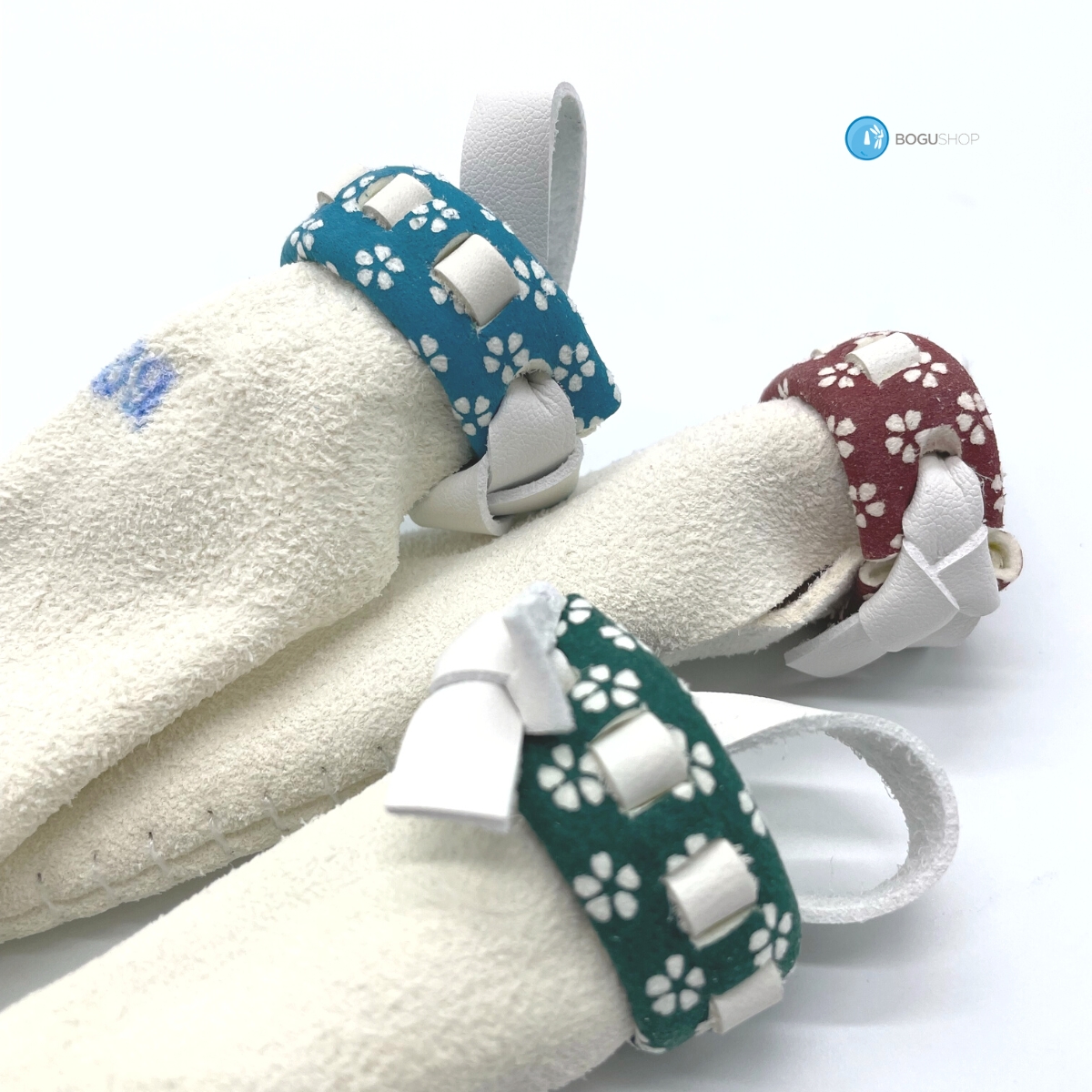
The leather handle can eventually stretch, tear or become too loose. It can also be changed intentionally when a kendoka wants a different grip length, provided the replacement fits the bamboo correctly.
Removing a tight tsukagawa
New tsukagawa can be extremely tight because they are often installed under considerable tension. Instead of pulling only from the opening, work the leather downward gradually.
- Untie the tsuru completely from the handle.
- Grip the tsukagawa firmly near the open end.
- Push the leather slightly downward to create a small wrinkle.
- Work that wrinkle progressively toward the bottom.
- Repeat around the circumference until the leather begins to move.
Avoid striking the exposed bamboo aggressively with a hammer or metal tool. The goal is to move the leather, not shock or crush the bamboo handle.
Installing a new tsukagawa
A replacement should match both the approximate shinai size and the actual handle circumference. Two size-39 shinai can have noticeably different grip diameters.
If it is too narrow
Do not force an obviously undersized leather handle onto a large-grip shinai. Choose a wider tsukagawa.
If it is slightly tight
Work it on gradually and evenly rather than pulling one side excessively. Leather will conform somewhat with careful installation.
If it is loose
The handle should not freely rotate during keiko. A badly oversized tsukagawa should be replaced with a better-fitting one.
Can a shorter tsukagawa change your grip?
Yes. Some kendoka deliberately use a shorter handle to bring their hands closer together. However, this changes the feel and balance of the shinai and the replacement leather must still fit securely and provide enough material for the tsuru connection.
If you have never replaced a tsukagawa before, ask an experienced instructor or senpai to show you the first time.
Choosing and Positioning the Correct Tsuba
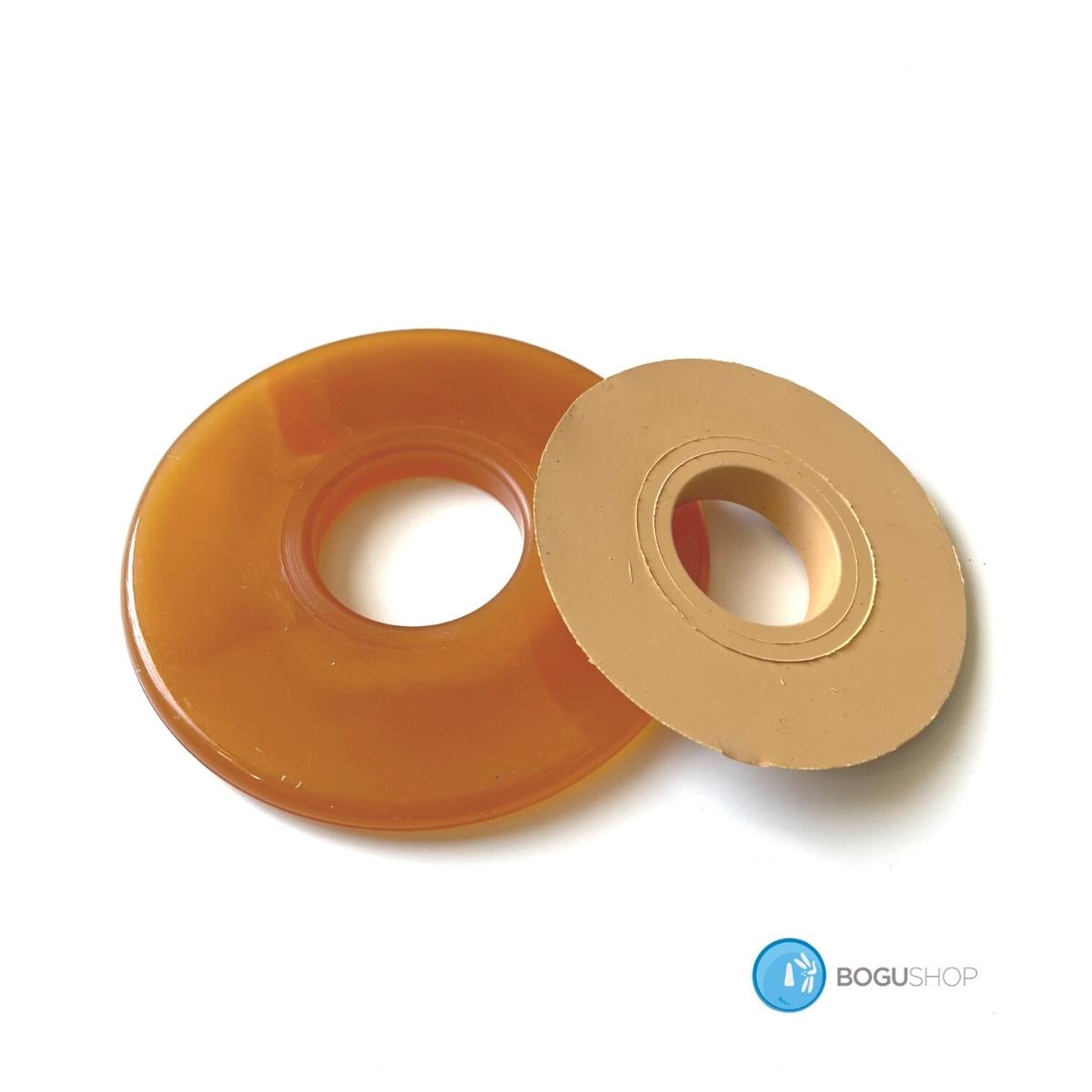
The tsuba must fit the actual shinai handle. A standard grip, large grip and koban handle can require different centre-hole dimensions even when the shinai is the same overall length.
Where should the tsuba sit?
Slide the tsuba down the bamboo until it reaches the top of the tsukagawa. It should sit directly against the end of the leather handle.
The tsubadome then sits behind the tsuba on the handle side, preventing the guard from sliding backward toward your hands.
A correct tsuba should:
- Fit the handle opening without excessive wobble.
- Not require dangerous force to install.
- Rest against the upper edge of the tsukagawa.
- Be secured by a properly fitting tsubadome.
- Remain fixed during normal practice.
Competition rule
Under All Japan Kendo Federation rules, the tsuba is circular, made of leather or synthetic material, fixed to the shinai, and no more than 9 cm in diameter.
Replace Worn Fittings Before They Fail
Bamboo gets most of the attention, but the shinai is a complete system. Leather and cord parts wear out too.
| Part | What to check | Replace when | Why it matters |
|---|---|---|---|
| Sakigawa | Tip wear, thinning leather, broken stitching | Hole develops or stitching begins opening | Contains and protects the shinai tip |
| Sakigomu | Shape, cracking, fit | Damaged, missing or badly deformed | Supports the four staves under the tip |
| Nakayui | Tension, wear, position | Frayed, torn or unable to remain secure | Helps bind the shinai and defines the monouchi area |
| Tsuru | Fraying, stretch, knot security | Damaged or no longer maintains tension | Holds the sakigawa assembly in position |
| Tsukagawa | Seam, holes, twisting | Torn, seam opens or handle becomes too loose | Provides secure grip and anchors the tsuru |
| Tsubadome | Grip and elasticity | No longer prevents the tsuba from sliding | Keeps the handguard fixed |
Useful Shinai Maintenance Tools
You do not need a large workshop. A compact maintenance kit carried in your bogu or shinai bag is enough for most routine work.
Shinai Sandblock
Useful for smoothing minor raised fibres and finishing a repaired surface without aggressively removing bamboo.
View SandblockShinai Repair Knife
Designed for carefully shaving loose bamboo fibres before the area is finished with sandpaper.
View Repair KnifeWalnut Shinai Oil
Helps condition dry bamboo. Apply lightly with a clean cloth and wipe away excess before using the shinai.
View Shinai OilReplacement Fittings
Carry a spare tsuru, nakayui, sakigawa and sakigomu. They are small, inexpensive and can save a practice session.
Shop Shinai PartsAdd gloves to your maintenance kit
Bamboo splinters can be extremely sharp. Work gloves or rubber-coated gloves give better grip when removing a tight tsukagawa and help protect your hands while handling damaged bamboo.
Storage and Everyday Care
Shinai maintenance is easier when the bamboo is not repeatedly subjected to extreme dryness, heat or neglect.
Avoid extreme heat
Do not leave bamboo shinai for long periods in a hot vehicle or directly beside a heater.
Avoid extreme dryness
Very dry environments can encourage brittle fibres and splintering.
Keep them clean
Wipe away dust and debris before oiling or repairing the bamboo.
Rotate your shinai
If you train frequently, owning several shinai lets you inspect and repair one properly instead of rushing it back into service.
Carry a spare
If a defect appears during class, switch shinai immediately instead of attempting a hurried repair beside the dojo floor.
Inspect after travel
Shinai can be knocked or compressed in a vehicle, aircraft or equipment bag. Check them again before keiko.
A Practical Shinai Maintenance Routine
| When | What to do |
|---|---|
| Before every keiko | Inspect all bamboo surfaces, tsuru tension, sakigawa, nakayui, tsukagawa, tsuba and tsubadome. |
| After a hard practice | Check the striking area again for new fibres or small splinters. |
| When a splinter appears | Stop using the shinai. Repair the surface properly before the next practice. |
| When fittings loosen | Re-tie the tsuru or nakayui rather than continuing until they become very loose. |
| When bamboo feels dry | Inspect carefully and apply an appropriate light conditioning treatment if needed. |
| When a crack is discovered | Remove the shinai from service. Replace the affected stave or replace the shinai. |
When in Doubt, Change Shinai
Shinai maintenance is not mainly about making bamboo last forever. Its purpose is to keep the shinai safe and predictable for both you and the person standing in front of you.
Stop immediately if damage develops during practice
A damaged shinai should not finish “just one more round.” Excuse yourself, change shinai and inspect the damaged one away from the practice area.
Experienced kendoka often become very good at extending the life of their shinai, but there is a point where removing more bamboo or repeatedly rebuilding a damaged stave no longer makes sense. Bamboo is replaceable. Your training partner's safety is not.
Keep a Shinai Maintenance Kit in Your Bogu Bag
A sandblock, repair knife, spare tsuru, nakayui, sakigawa and a small amount of shinai oil cover most routine maintenance needs.
Shop Shinai Accessories Shop Shinai
Customer Service

Incorporated in 2007, Bogushop has been providing quality Kendo equipment all around the world ever since. Read More
Contact Us
Please call us by:
Phone: (604)303-0033
Email: customercare@bogushop.com
In Person: Book an appointment
Connect with Us

