

Fabric & Weave
Cotton absorbs moisture and develops a traditional character. Sports jersey prioritizes airflow, lightness and fast drying. Textured weaves can lift fabric away from the skin and improve airflow.


Bogushop Kendo Guide
Learn about kendo keikogi construction, sizing, materials, care and how to wear a keikogi correctly.
From airy jersey to traditional double-layer cotton, learn how fabric, weave, lining and dye change comfort, appearance, care and performance.
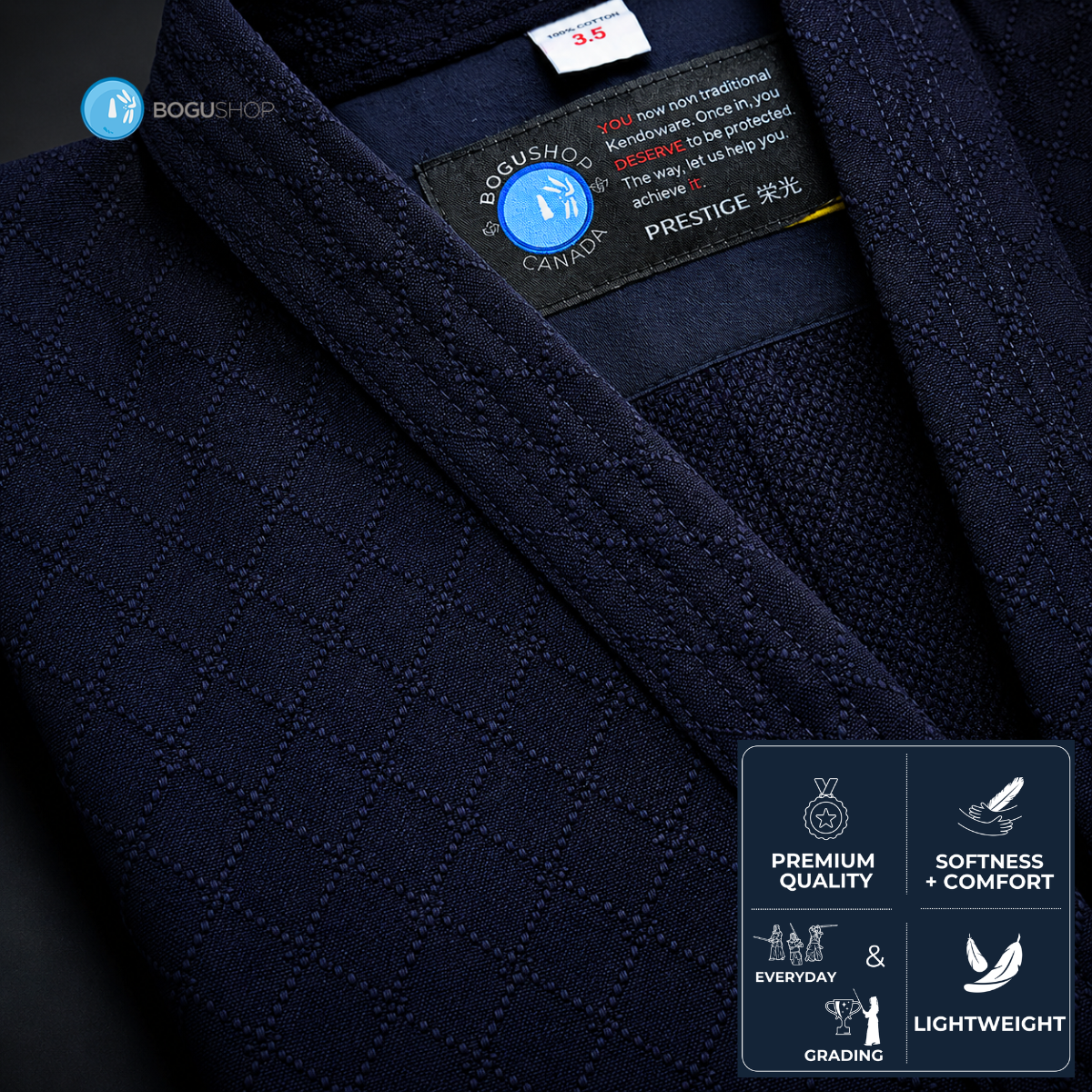
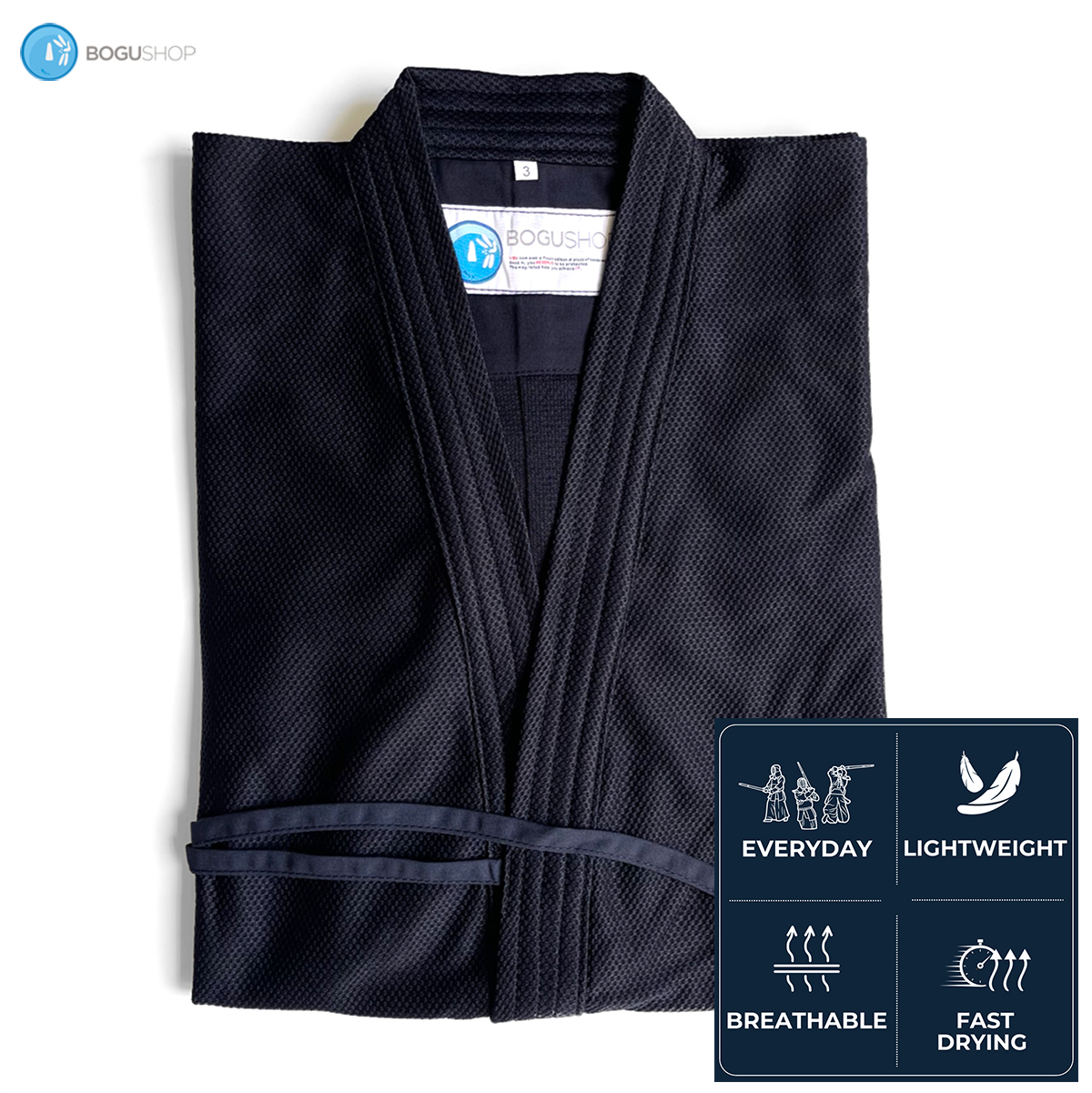

A summer jersey, lightweight cotton practice gi and premium double-layer gi solve different problems. Start with when and where you train, then consider appearance, laundry routine, dojo expectations and personal comfort.
Product names can sound complicated, but almost every difference comes from three decisions: the outer fabric, the amount of structure, and what touches your skin.
Cotton absorbs moisture and develops a traditional character. Sports jersey prioritizes airflow, lightness and fast drying. Textured weaves can lift fabric away from the skin and improve airflow.
Single-layer keikogi are generally lighter and cooler. Double-layer versions feel more substantial, hold a formal silhouette and absorb more moisture, but are warmer and slower to dry.
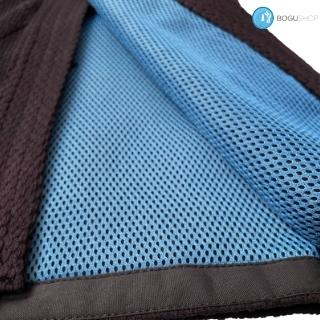
A quick-dry or mesh lining can keep a cotton exterior while changing the next-to-skin feel. Dye and finishing determine colour depth, softness, fading and care needs.
Lightest care burden and fastest drying.
Traditional feel with everyday practicality.
Cotton appearance with moisture-managing interior.
Most substantial structure and formal presence.
These are useful tendencies, not rigid rules. Fit, weave density and the exact fabric can make two keikogi in the same category feel different.
| Type | Construction | Best suited to | Main strength | Main trade-off |
|---|---|---|---|---|
| Musashi | Single cotton | Children, smaller adults, everyday practice | Light with distinctive diamond pattern | Limited adult sizing |
| Standard single-layer | Single cotton | Beginners and regular keiko | Simple, affordable traditional choice | Less structure than double-layer |
| Supercool jersey | Sports jersey | Hot dojo, frequent practice, travel | Very light and quick-drying | Less cotton-like feel and appearance |
| White traditional-look jersey | Thicker jersey | Warm-weather use with a substantial look | Cooling plus cotton-like appearance | Heavier than ultralight jersey |
| Power-Dry | Cotton + lining | Everyday practice in warm conditions | Traditional outer with quick-dry interior | Lined construction costs more |
| Hydro-Mesh | Cotton + mesh | Soft comfort and moisture management | Soft lining and premium cotton look | More complex care than plain jersey |
| Traditional double-layer | Double cotton | Cooler dojo, formal use, traditional feel | Structure, absorption and substantial presence | Warmest and slowest drying |
| SoraFlow | Textured cotton | Long keiko, grading and warm conditions | Airflow with genuine indigo appearance | Indigo transfer and careful washing |
| Prestige Comfort | Soft double cotton | Keiko, shiai and grading | Premium softness with formal structure | Warm, heavier and slower drying |
Each explanation separates what the keikogi physically is from the reason someone might choose it. The advantages and trade-offs are equally important.
 1Musashi diamond pattern
A lightweight cotton keikogi recognized by its contrasting diamond-pattern stitching.
Traditionally used as a youth keikogi in Japan, it gives children and shorter practitioners a light, absorbent uniform with a distinctive appearance.
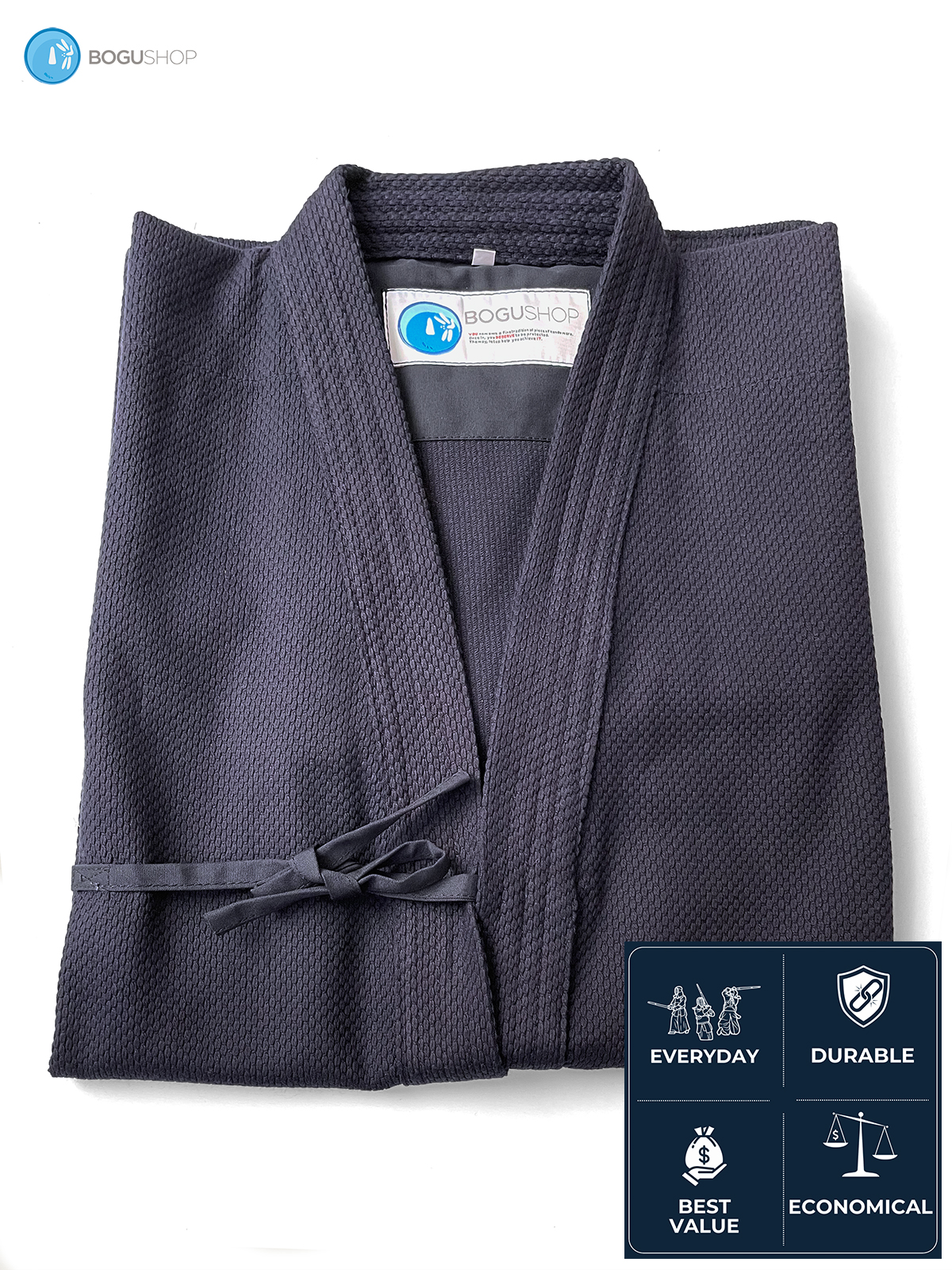 2Everyday cotton foundation
The straightforward everyday keikogi: lighter than double-layer cotton and more traditional in feel than jersey.
To provide a comfortable, economical uniform that works for beginners and experienced kendoka alike. It balances cotton absorption, mobility and a traditional appearance.
3Lightest everyday performanceA very light, breathable keikogi for kendoka who prioritize cooling, fast turnaround and easy travel.
To release heat and dry quickly between frequent sessions. It is especially practical in summer, hot dojo, seminars and travel where a heavy wet cotton gi is inconvenient.
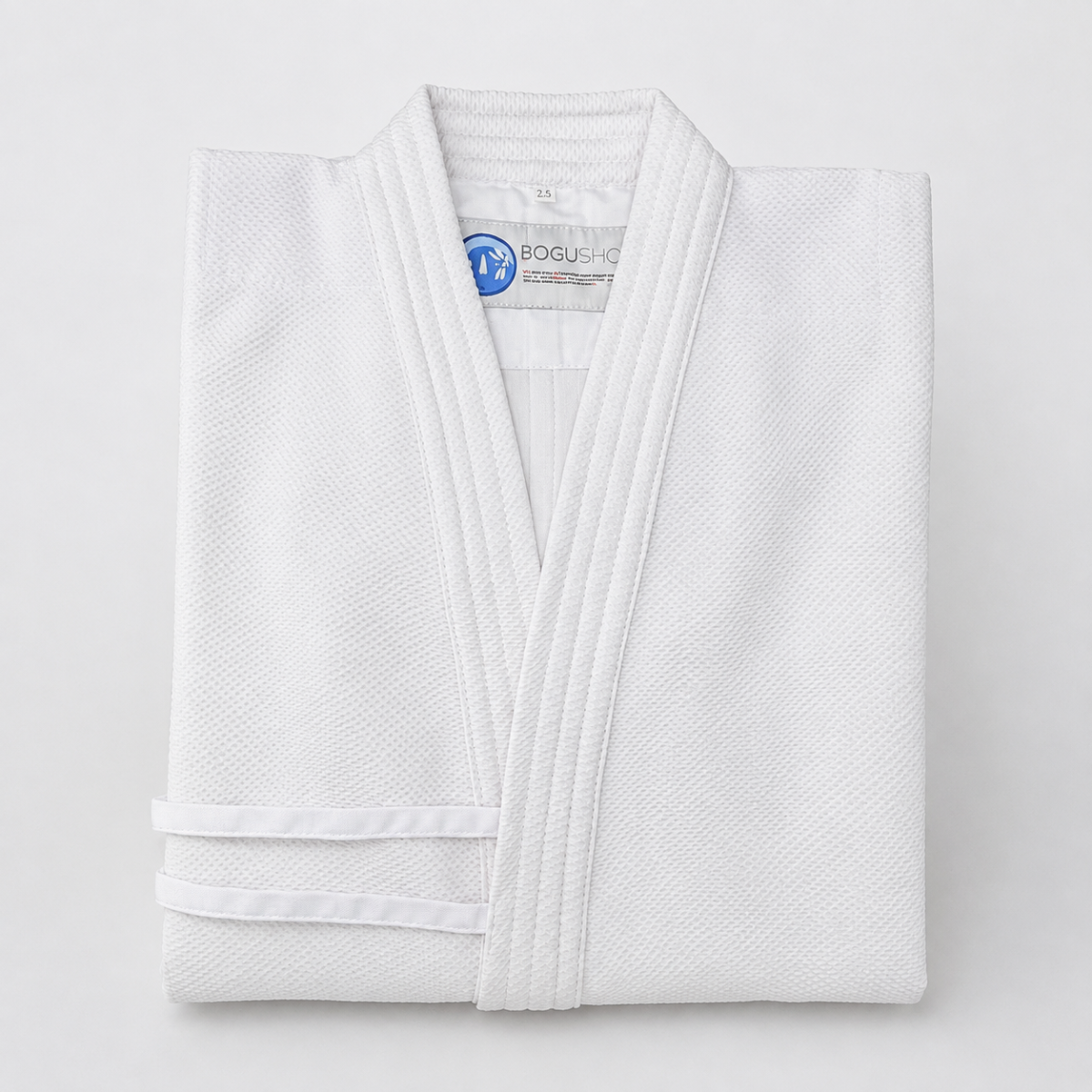 4Thicker jersey, classic white
A more substantial jersey keikogi designed to look closer to cotton while retaining cooling and quick-dry benefits.
To serve kendoka who want a white, cotton-like appearance without accepting the drying time and heat retention of traditional cotton.
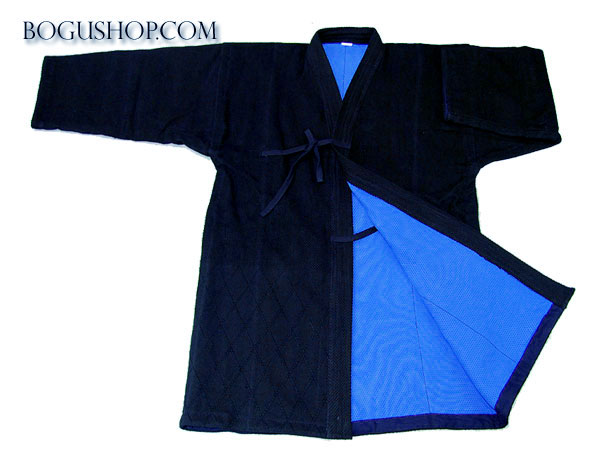 5Cotton outside, quick-dry inside
A traditional indigo cotton exterior paired with a moisture-managing lining for warm-weather comfort.
To preserve the look and absorbent character of cotton while improving next-to-skin dryness during demanding everyday practice.
 6Soft mesh moisture management
A soft, lightweight hybrid for kendoka who want a premium cotton appearance with jersey-like moisture management.
To make a lined keikogi feel softer and more comfortable while keeping the refined visual texture of traditional cotton.
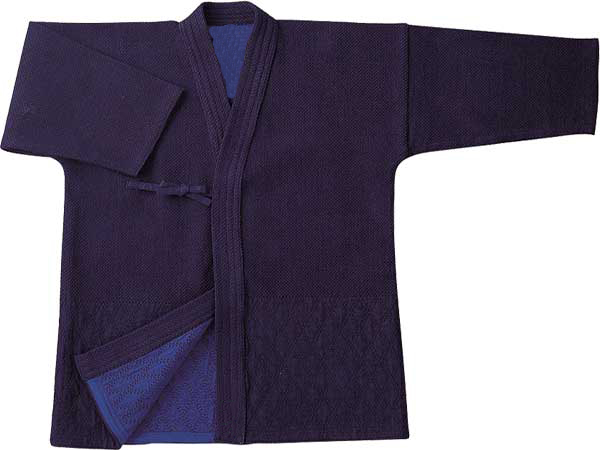 7Traditional weight and structure
The classic substantial option: absorbent, structured and visually formal, with more warmth and drying time.
To provide a fuller, more structured uniform that absorbs perspiration, holds a poised silhouette and offers slightly more cushioning from incidental contact.
8Raised weave for airflowA modern lightweight cotton keikogi whose raised weave reduces cling and promotes airflow without losing a grading-appropriate presentation.
To combine the colour and refined appearance of traditional indigo cotton with better airflow, softness and comfort during warm or extended keiko.
9Soft premium double layerA premium double-layer indigo cotton keikogi woven for softness, comfort and a poised appearance.
To give experienced kendoka the absorbency and formal silhouette of double-layer cotton while improving comfort enough for regular practice.
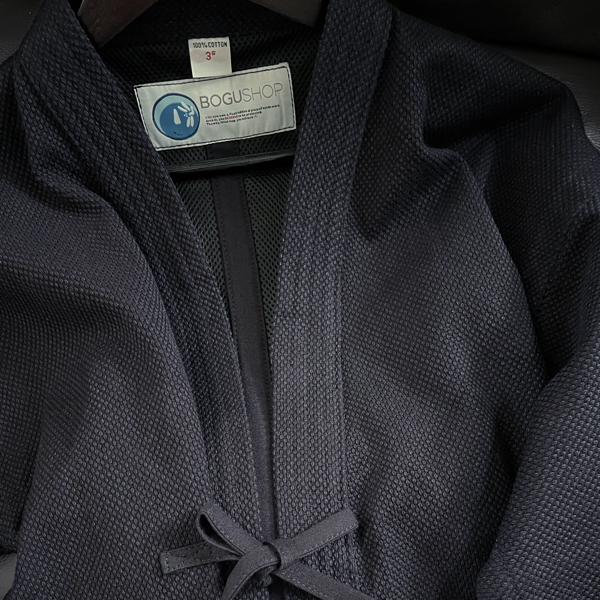
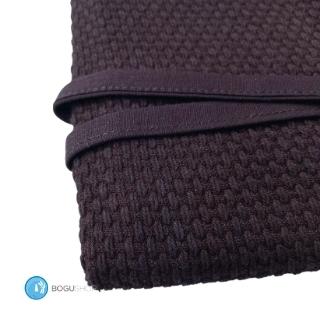
The same fabric can feel and age differently depending on how it is dyed. Colour choice may also be shaped by dojo custom rather than performance alone.
Traditional indigo gives cotton keikogi a deep, nuanced blue that gradually develops character through wear and washing. Some colour rubbing or transfer—especially when new—is normal, not necessarily a defect.
Blue is the most universal kendo choice. White has a clean traditional history and is accepted in many settings, while black is often used more freely in iaido or aikido than in kendo.
Most active kendoka eventually own more than one keikogi because a hot summer keiko and a grading have different priorities.
Start with Supercool Jersey, SoraFlow or a standard single-layer. Choose Hydro-Mesh or Power-Dry if you want a more traditional cotton appearance.
Quick-dry jersey is easiest to rotate through daily training. A second cotton keikogi gives variety while the first one dries completely.
SoraFlow, Hydro-Mesh, traditional double-layer and Prestige Comfort provide a refined appearance. Confirm any event-specific expectations.
Jersey packs small and dries quickly. SoraFlow offers a more traditional alternative without the bulk of a heavy double-layer gi.
For most beginners, start with the standard single-layer cotton model: it is economical, comfortable and appropriate for regular practice. Choose Musashi for children and shorter adults. Choose jersey first only when heat, laundry speed or frequent practice is the main concern.
The best material cannot compensate for poor fit or improper washing. Always follow the instructions on the individual product page.
Use the BoguShop Keikogi Finder for a guided recommendation, compare the complete product lineup, or check the size chart before ordering.
Performance descriptions explain general construction tendencies. Exact fabric, available sizes, care instructions and inventory are shown on each product page and may change over time.

Incorporated in 2007, Bogushop has been providing quality Kendo equipment all around the world ever since. Read More
Please call us by:
Phone: (604)303-0033
Email: customercare@bogushop.com
In Person: Book an appointment

