
logo

Bogushop Kendo Guide

Complete Shinai Guide: Types, Sizes, Shapes & Choosing a Shinai

Learn about shinai sizes, bamboo construction, balance, grip shapes, profiles and how to choose the right shinai for kendo practice and competition.

BoguShop Kendo Guide

Shinai Shape Explained

Round or oval? Dōbari or koto? Learn how grip shape, grip size, grip length and bamboo profile change the way a shinai feels in your hands.

6 grip types 4 performance profiles Advantages & trade-offs Real BoguShop examples
!
Shape does not replace size or regulations.

Choose the correct shinai length, weight and minimum tip diameter first. Shape is a preference that changes handling; it is not an automatic upgrade. Your sensei or dojo requirements should always take priority.

Grip and Profile Describe Different Things

A shinai can combine several labels. For example, one model may be dōbari in profile, octagonal-oval in grip shape, large in grip diameter and short in grip length.

What your hands feel

Grip: shape, thickness and length

The tsuka is the handle. Its cross-section may be round, oval or faceted; its diameter may be standard or large; and its length may be standard or short.

  • Shape changes tactile blade-orientation feedback.
  • Thickness changes how fully the handle fills the hands.
  • Length changes hand spacing and leverage.
How the bamboo carries mass

Profile: body shape and balance

The bamboo body may swell more near the hands or remain relatively straight. That distribution affects how much presence you feel at the tip and how quickly the shinai starts, stops and redirects.

  • Dōbari carries more bamboo near the lower body.
  • Koto has a straighter, more even silhouette.
  • Narrow tip reduces material toward the upper end.
i
Why do “koban” and “octagonal” sometimes appear in profile lists?

Stores sometimes use the most distinctive feature as the product category name. Technically, koban and octagonal describe the handle cross-section, not the bamboo body profile. A koban or octagonal shinai can still be dōbari, koto or another profile.

Quick Shape Comparison

Use this table to understand the main tendency of each feature. The complete construction—not one label alone—determines the final feel.

Feature Type Main purpose Typical feel Keep in mind
Standard round Grip Neutral all-purpose handling Familiar and adaptable Less tactile blade indexing
Koban / oval Grip Make blade orientation easier to feel Katana-like directional reference More specialized sensation
Octagonal Grip Provide defined surfaces for the hands Firm, strongly indexed Facets may feel unfamiliar
Large Grip size Better fill larger hands Substantial and stable Can be tiring if too large
Short grip Grip length Bring the hands closer together Distinct leverage and snap Changes familiar hand spacing
Katate koban Hybrid grip Give one hand oval indexing Anchored lower hand, freer upper hand Construction varies by model
Dōbari Profile Move perceived balance toward the hands Responsive and tip-light Less forward presence
Jissengata Configuration Competition-oriented responsiveness Fast and manoeuvrable Not one universal shape
Koto Profile Preserve a straight, traditional form Even or forward presence May feel more demanding
Narrow tip Profile detail Reduce upper-end mass Quick tip response Must meet applicable rules

Shinai Grip Types

Grip preference depends on hand size, experience and technique. A good grip supports relaxed hands and correct tenouchi; it should never force you to squeeze harder.

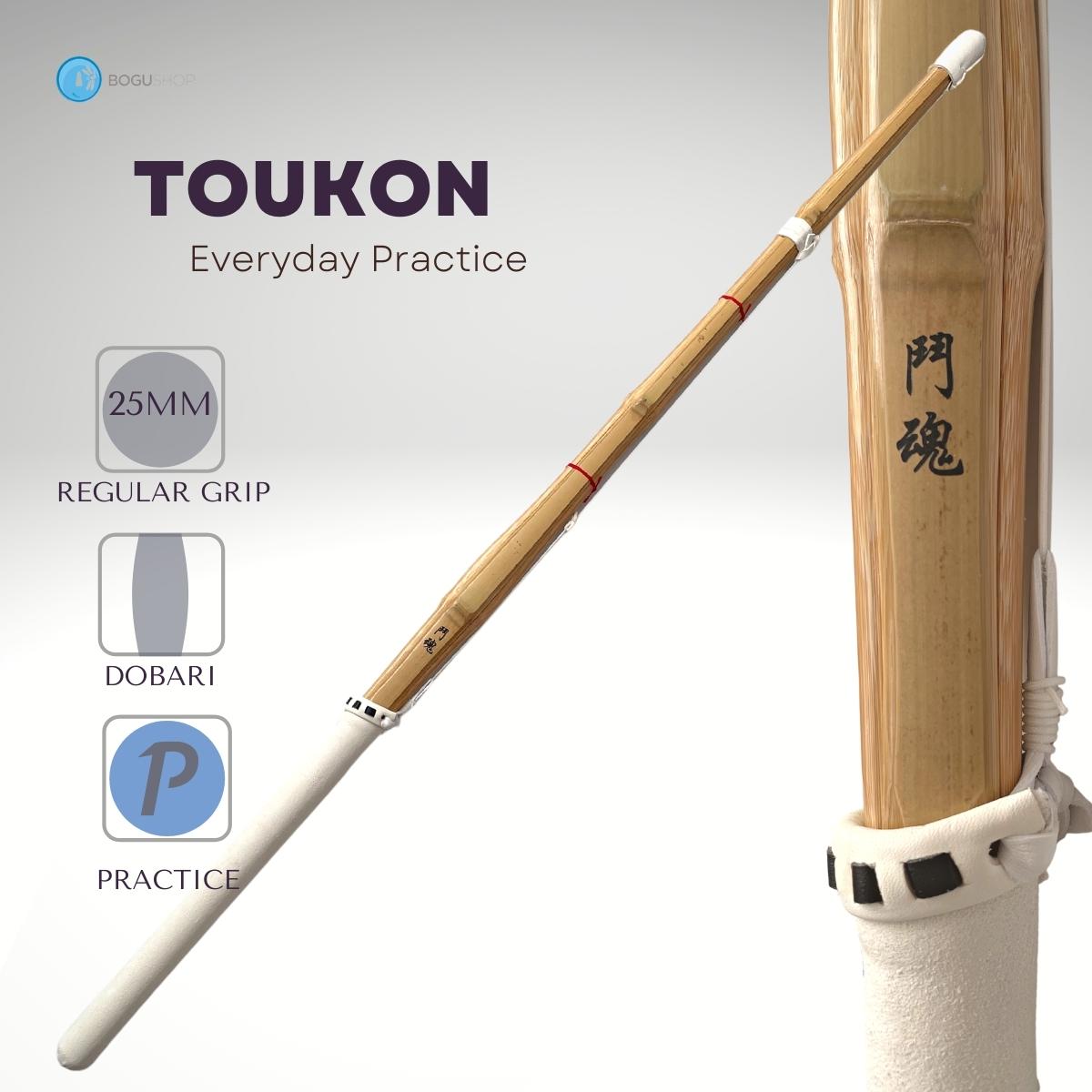
Toukon practice shinai with standard round grip1
 

Standard Round Grip

The neutral reference point
What it is: A circular tsuka cross-section with no flat side telling the hands which direction the blade faces.

Purpose

To provide a versatile, familiar handle that suits everyday keiko, beginners and a wide range of techniques.

Advantages

  • Familiar and widely available
  • Easy to adjust subtly in the hands
  • Good general-purpose starting point

Trade-offs

  • Less tactile feedback for blade angle
  • Correct hasuji must be learned without shape cues
BoguShop example: ToukonEveryday practice, regular grip
View example
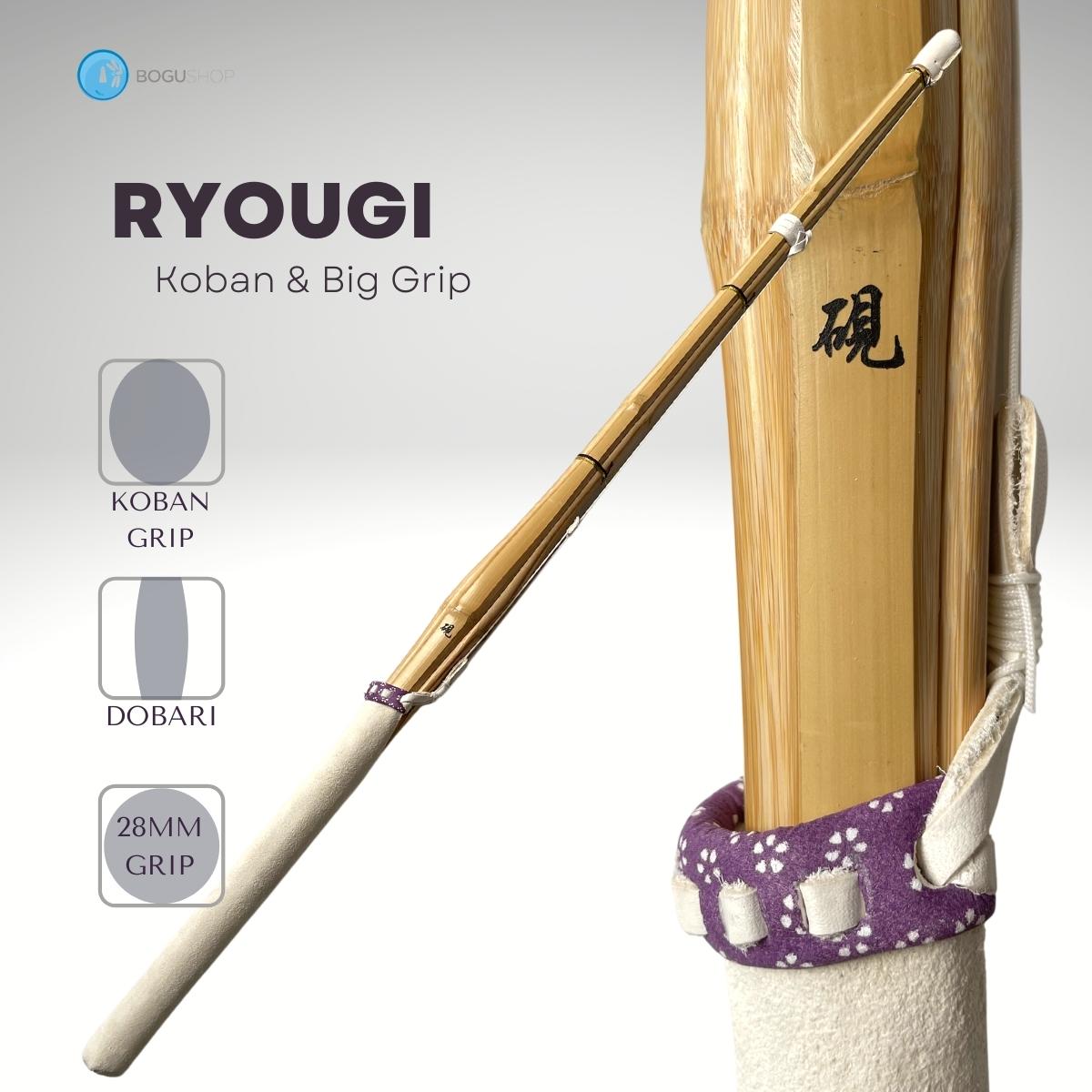
Ryougi shinai with koban oval grip2
 

Koban / Oval Grip

Named after an oval Japanese coin
What it is: An oval handle cross-section, wider from side to side and narrower from front to back, closer in concept to the grip of a Japanese sword.

Purpose

To let the hands feel blade orientation. The oval acts as a tactile guide for hand placement and hasuji during the swing.

Advantages

  • Clear directional feedback
  • Encourages consistent hand alignment
  • Distinct, sword-like grip sensation

Trade-offs

  • May feel restrictive after a round grip
  • Shape cannot correct technique by itself
  • Fewer choices than standard round
BoguShop example: RyougiDōbari with large koban grip
View example
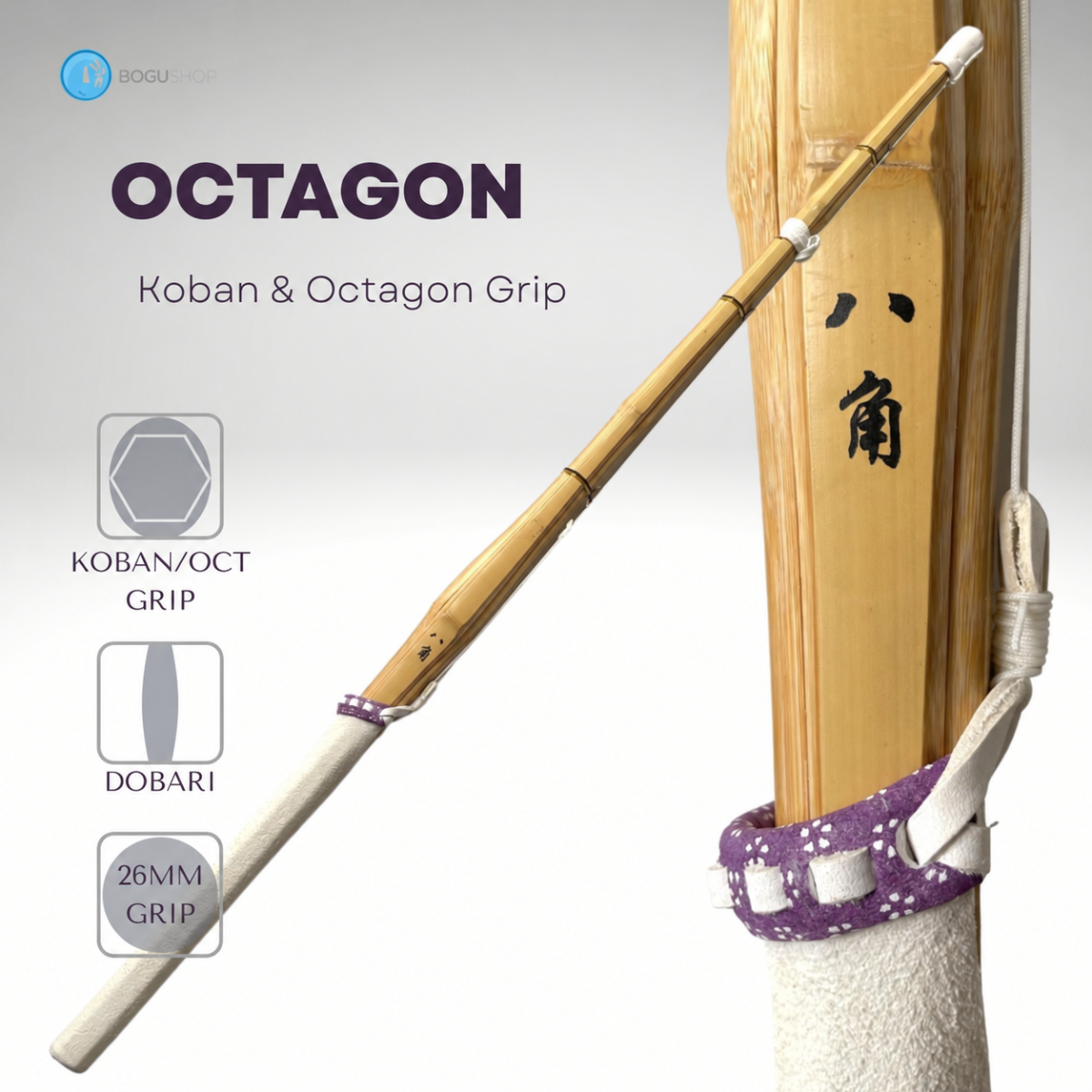
Octagonal oval grip shinai3
 

Octagonal Grip

Also called hakkaku; often oval as well
What it is: A faceted handle with defined flat surfaces. Many kendo versions combine an octagonal form with an oval overall cross-section.

Purpose

To give the hands stronger indexing than a smooth oval. The facets make rotation and placement especially easy to sense.

Advantages

  • Strong tactile orientation
  • Firm, planted sensation
  • Easy to recognize hand rotation

Trade-offs

  • Edges may feel unusual at first
  • Can feel overly locked-in for some users
  • Exact facet shape varies by model
BoguShop example: HexagonDōbari with faceted koban grip
View example
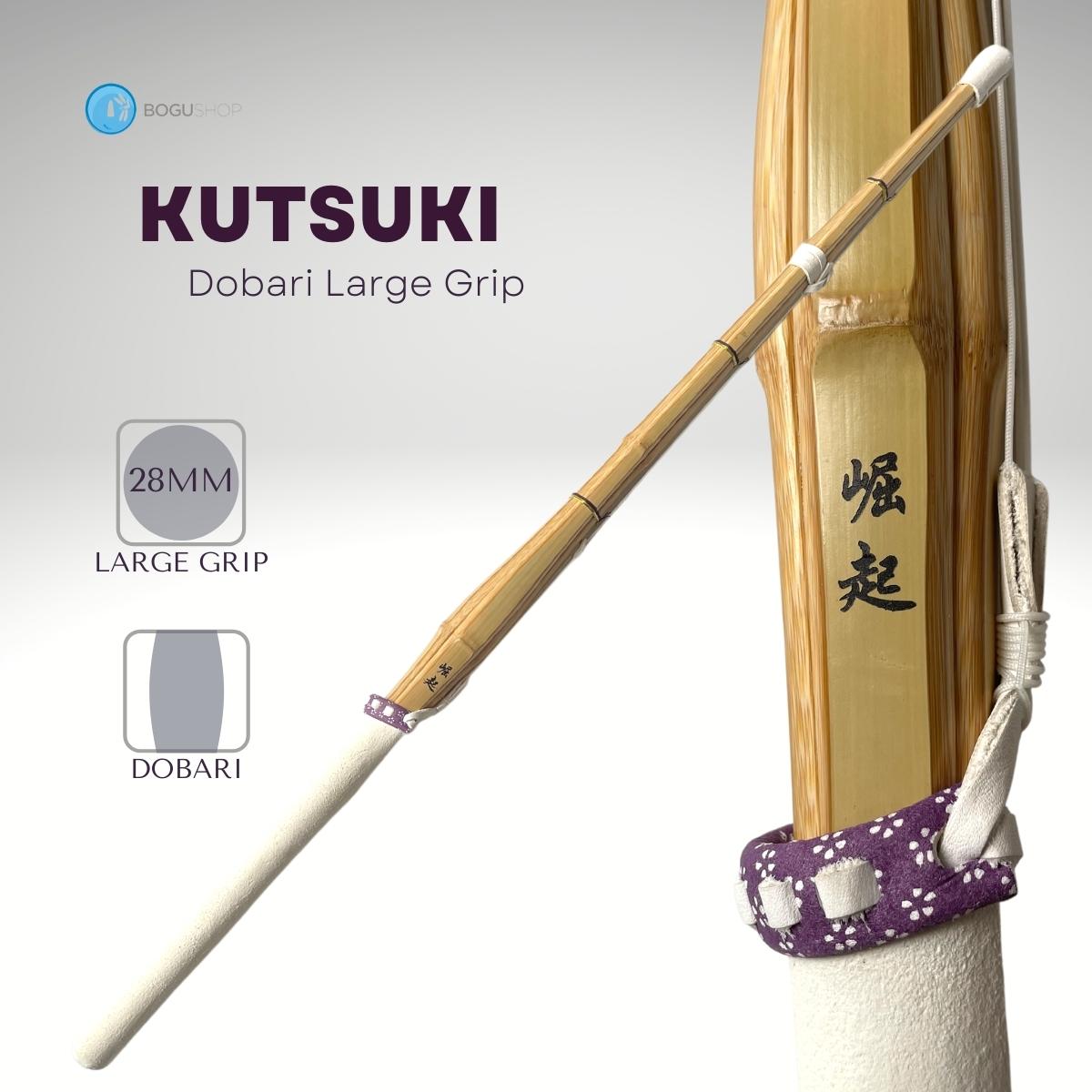
Kutsuki shinai with large grip4
 

Large Grip

Diameter, not a separate cross-section
What it is: A tsuka with a wider diameter than standard. It may still be round, oval or octagonal.

Purpose

To fill larger hands more naturally and give kendoka who prefer a substantial handle more surface to hold.

Advantages

  • Better fit for many larger hands
  • Substantial, stable feeling
  • May discourage over-closing the fingers when correctly fitted

Trade-offs

  • Can create tension if too large
  • May fatigue smaller hands
  • Check that the tsuba fits the thicker tsuka
BoguShop example: KutsukiDōbari, 28 mm large grip
View example
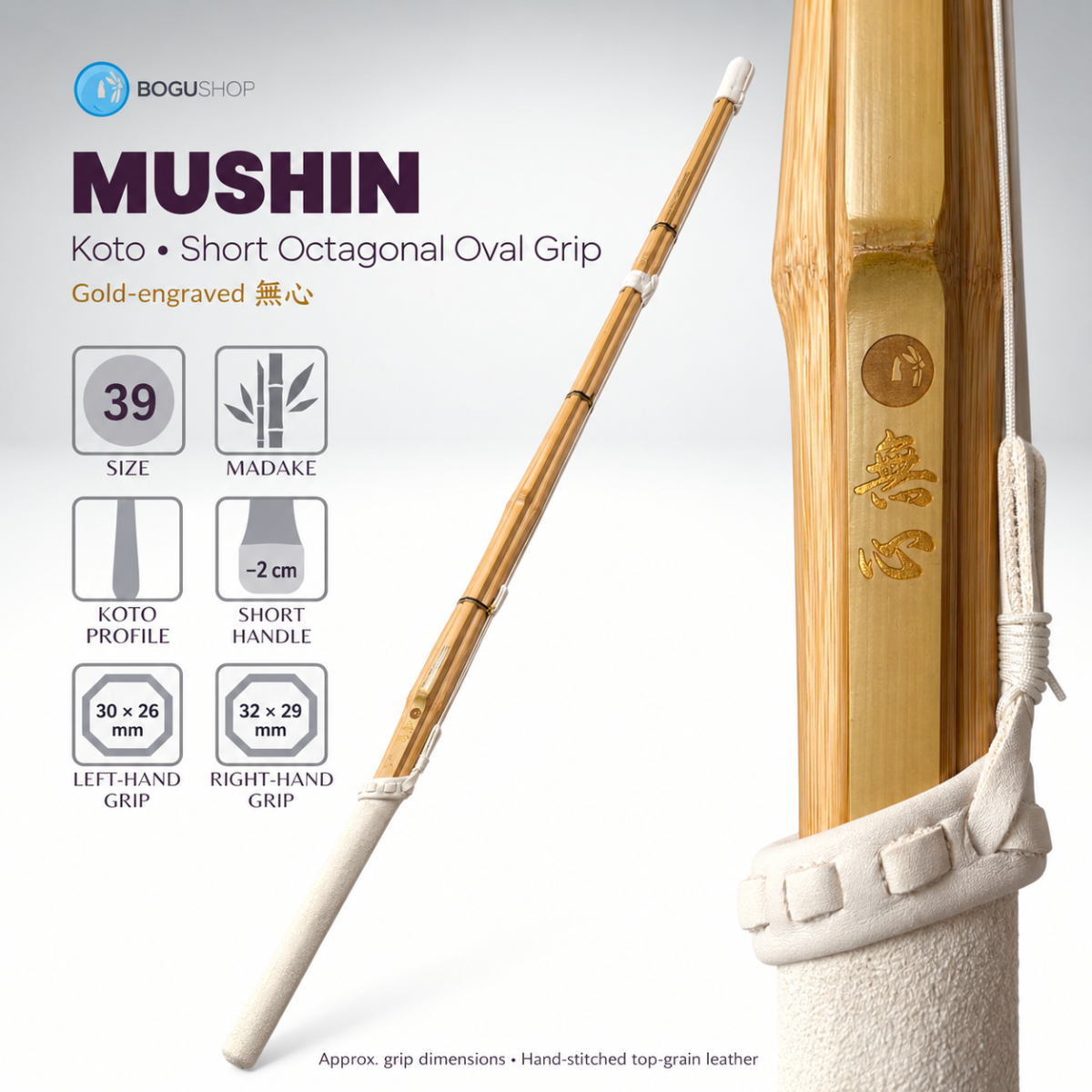
Mushin koto shinai with short grip5
 

Short Grip

Tsukatan: a shorter-than-standard tsuka
What it is: A shorter handle that positions the hands closer together. The exact reduction differs by model; BoguShop’s Mushin is approximately 2 cm shorter than standard.

Purpose

To change leverage, hand spacing and the way the tip accelerates. Experienced users may choose it for a compact grip and distinctive sae.

Advantages

  • Closer, compact hand position
  • Distinct snap and leverage
  • Can make the blade feel lively

Trade-offs

  • Changes familiar timing and spacing
  • Not automatically easier or faster
  • Replacement tsukagawa must match
BoguShop example: MushinShort grip, koto, octagonal oval
View example
Shinmei shinai with katate koban grip6
 

Katate Koban Grip

A hybrid grip; check each model
What it is: Koban shaping applied mainly to one hand position. On the Shinmei, the left-hand area is oval while the right-hand area is round.

Purpose

To give the lower hand a clear directional anchor while preserving a more neutral, flexible sensation under the upper hand.

Advantages

  • Oval indexing where the left hand anchors
  • Round upper area allows familiar adjustment
  • Blends two grip sensations

Trade-offs

  • Meaning is not identical across brands
  • Very specialized feel
  • Best tried after establishing basic grip
BoguShop example: ShinmeiOval left hand, round right hand
View example

Shinai Profiles and Balance

Two regulation-size shinai can weigh the same yet feel very different. The reason is mass distribution: bamboo carried closer to your hands generally feels quicker, while more mass through the blade gives stronger forward presence.

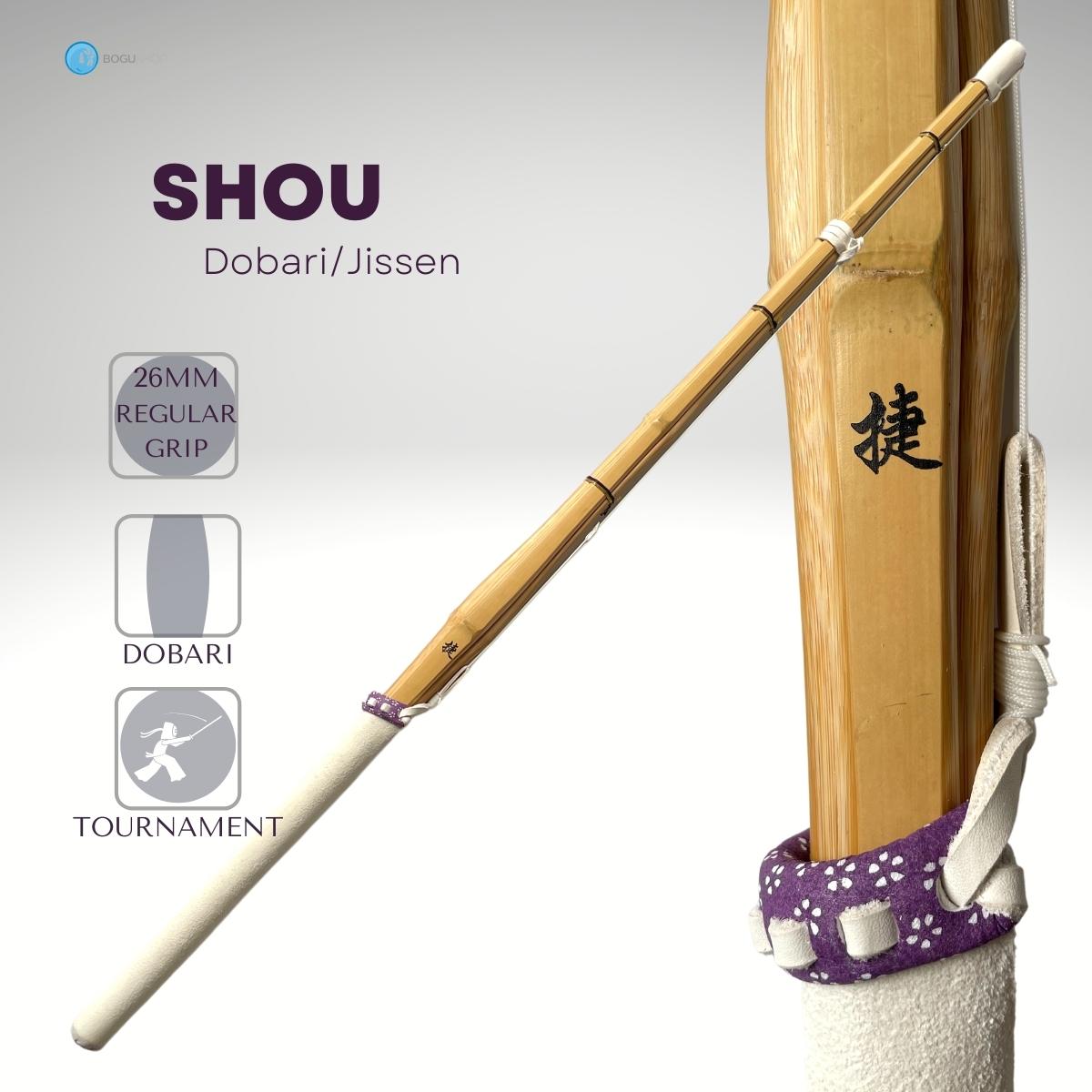
Shou dōbari jissengata shinai
Body profile

Dōbari (Dobari)


What it is: A profile with a pronounced swell in the lower bamboo body, just above the grip area. “Dō” refers to the body and “hari/bari” to the swelling or fullness.

Purpose: The wider lower body places more of the shinai’s mass closer to the hands, usually reducing the sensation of tip heaviness and making the shinai easier to start, stop and redirect.

Advantages

  • Responsive, hand-centred balance
  • Quick direction changes
  • Often feels lighter than its measured weight

Trade-offs

  • Less forward weight and feedback
  • May feel less substantial to koto users
  • Degree of dōbari varies by model
BoguShop example: ShouLarge dōbari with small tip
View example
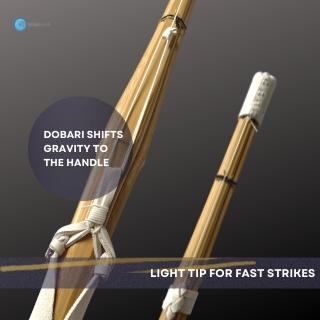
Close view comparing a narrow tip and hand-centred balance
Competition configuration

Jissengata


What it is: A competition-oriented design category rather than one universal outline. It commonly combines a pronounced dōbari area with a slimmer upper blade and narrow tip while still meeting applicable shinai regulations.

Purpose: To produce quick, responsive handling for competitive movement and rapid techniques. The perceived balance is normally brought back toward the hands.

Advantages

  • Fast, manoeuvrable sensation
  • Quick tip acceleration
  • Useful for experienced competitive preferences

Trade-offs

  • Not automatically better for shiai
  • Less tip presence than straighter profiles
  • “Jissengata” differs between makers
Common BoguShop examplesShou and Shinmei
Compare shinai
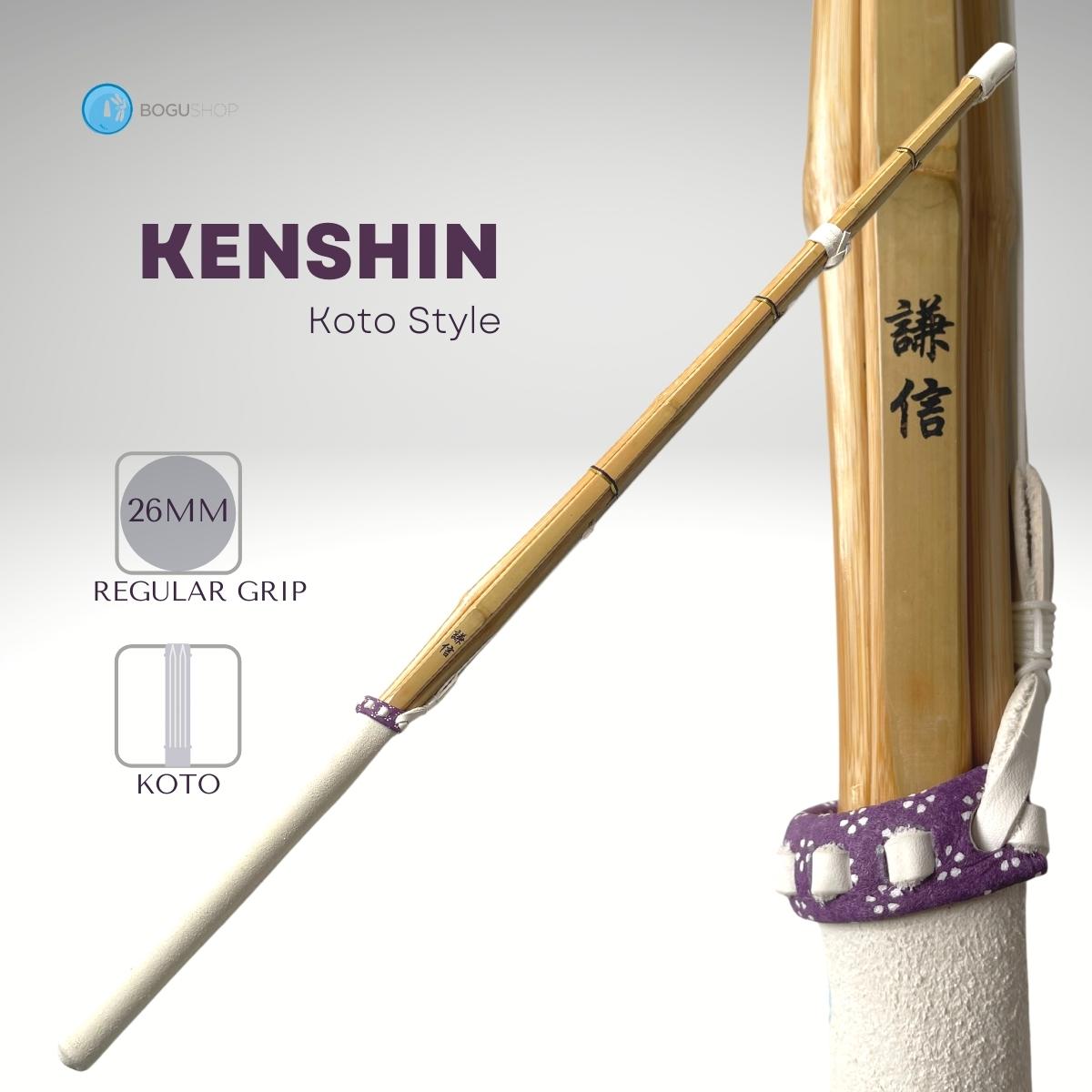
Kenshin koto style shinai
Body profile

Koto Style


What it is: A straighter, more even body with little pronounced swelling above the tsuka. It is intended to recall the simple, straight presence of older shinai forms.

Purpose: To retain more noticeable mass through the length of the blade, giving the user a clearer sense of the monouchi and a traditional, substantial response.

Advantages

  • Clear forward presence
  • Stable, substantial swing feeling
  • Traditional and direct response

Trade-offs

  • May feel tip-heavy beside dōbari
  • Can require more effort to redirect
  • Less suited to users seeking an ultra-light tip feel
BoguShop example: KenshinKoto style with small side bulge
View example
Close view of the Shou shinai upper profile and tip
Profile detail

Narrow Tip


What it is: A slimmer upper bamboo section toward the kensen. It is usually paired with a fuller lower body, because the complete shinai must still meet minimum weight and tip-diameter rules.

Purpose: To reduce mass at the far end of the shinai. A small change near the tip can noticeably affect perceived balance because it sits farthest from the hands.

Advantages

  • Quick tip response
  • Easy acceleration and redirection
  • Complements dōbari and jissengata designs

Trade-offs

  • Less weight sensation at the tip
  • Final feel depends on the whole profile
  • Competition diameter rules still apply
BoguShop example: Shou22.5 mm bamboo tip measurement; finished sakigawa must meet rules
View example
 

Koban is a grip, not a body profile

A product called “koban shinai” is being identified by its oval handle. Look separately for dōbari, koto or other profile information to understand its balance.


Octagonal is also a grip

Octagonal describes the faceted handle. It may be combined with an oval overall shape and with either a fuller dōbari body or a straighter koto body.

How to Choose Without Overthinking It

The best shinai is the one that meets the rules, fits your hands, supports correct technique and still feels controlled late in practice.

A practical order of decisions

  1. Confirm size and regulations. Age, category, gender division and dojo rules come first.
  2. Choose a comfortable diameter. Your hands should close naturally without excessive tension.
  3. Choose grip feedback. Stay round for neutral handling, or try oval/faceted shapes for stronger indexing.
  4. Choose the balance tendency. Dōbari for a hand-centred feel; koto for more forward presence.
  5. Fine-tune only after experience. Short grips, hybrid grips and extreme narrow-tip designs are preferences, not shortcuts.

Ready to Narrow Down Your Options?

Use the Shinai Finder for a guided recommendation, or compare BoguShop’s shinai lineup by grip, profile and experience level.

Simplified diagrams illustrate general tendencies and are not manufacturing specifications. Product dimensions and availability may change; always review the individual product page.

Contact Us

Please call us by:
Phone: (604)303-0033
Email: customercare@bogushop.com
In Person: Book an appointment  

Connect with Us

BoguShop FacebookBoguShop Instagram