

Standard Round Grip
A neutral, all-purpose shape and practical starting point.
Consider for: beginners and regular practice.


Bogushop Kendo Guide
Learn how to choose the right shinai based on size, balance, grip shape, skill level and competition requirements.
The right shinai should meet the requirements of your dojo or competition, while supporting comfortable grip, controlled movement and sound technique. Start with the correct size, then compare balance, bamboo profile and grip.
Begin with a legal and suitable length and weight.
Equal-size shinai can feel different because mass is distributed differently.
Grip thickness, shape and length affect hand placement and handling.
Do not use a shinai that is cracked, loose or splintered.
Shinai size is normally selected according to age, competition category and dojo guidance. Use these labels as orientation only.
Smaller junior sizes. Confirm with the instructor.
Common junior size. Confirm age-group requirements.
Used in particular age and competition categories.
Standard full-length adult size. Required weight still depends on category.
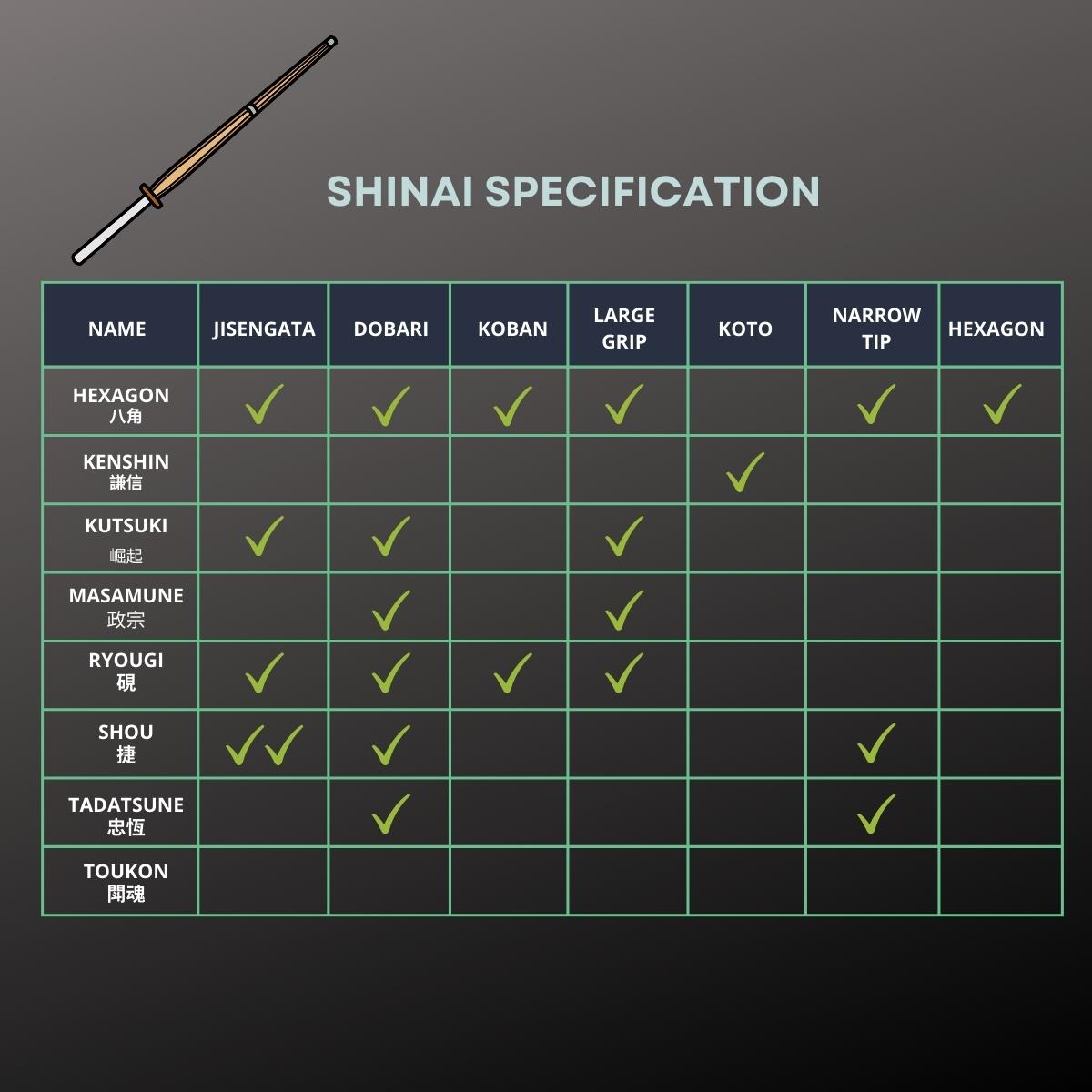
Use these reference diagrams when comparing product measurements and profiles. Select either image to open the full-size version.
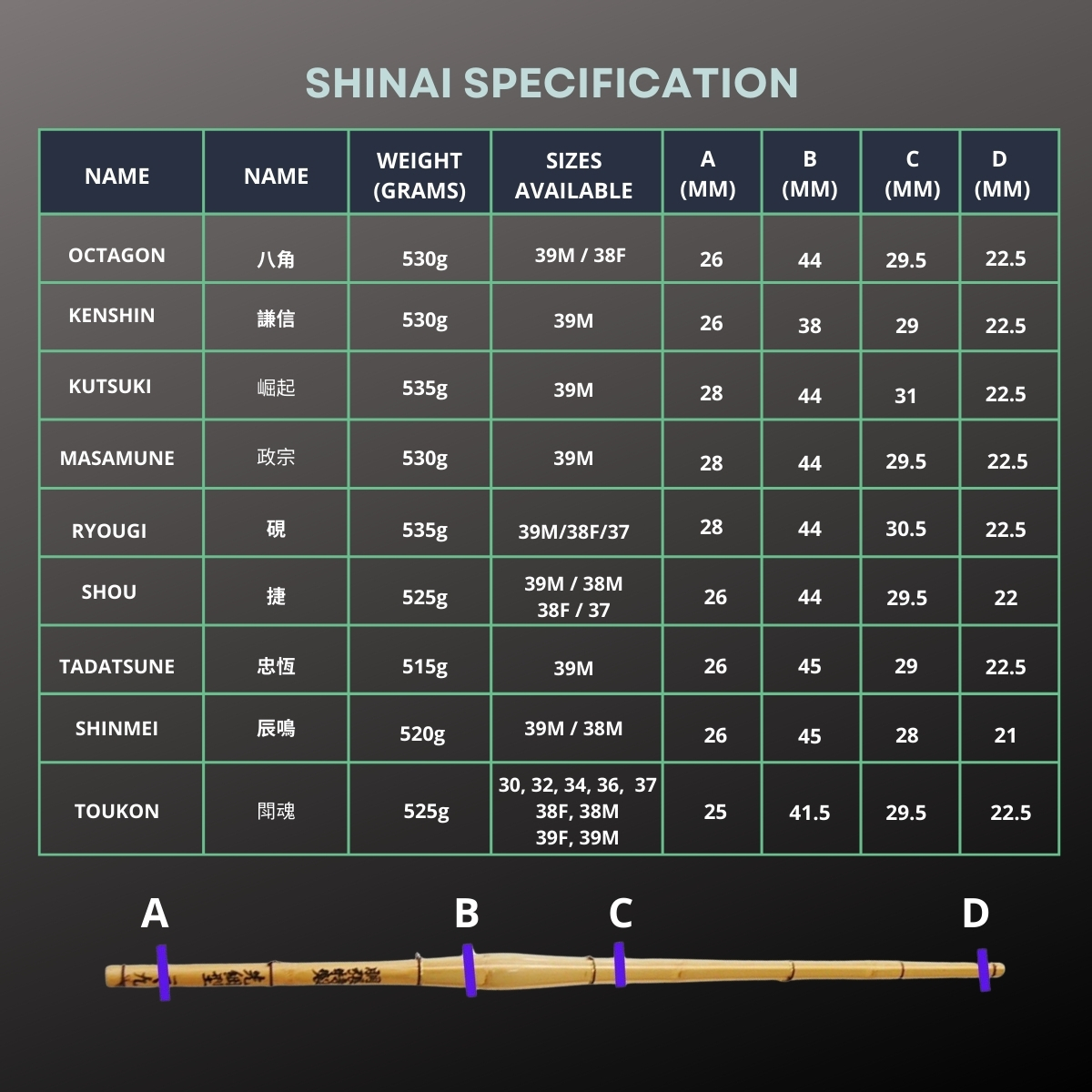
Two shinai can have the same length and weight but feel different because balance depends on where the bamboo carries its mass.
More noticeable mass toward the monouchi can feel substantial through the tip and during contact.
More mass closer to the hands can feel quicker to start, stop and redirect.
Choose the option that supports posture, relaxed shoulders, correct hand use and controlled technique.
Grip selection has three separate dimensions: shape, thickness and length.
A neutral, all-purpose shape and practical starting point.
The oval cross-section gives a clearer reference for blade orientation and hand placement.
Defined flat surfaces provide noticeable indexing in the hands.
A thicker tsuka fills more of the hands but should not force excessive tension.
A shorter tsuka places the hands closer together and changes leverage and timing.
Oval shaping is concentrated for one hand. Exact construction varies by model.
Profile names describe general bamboo shaping and distribution. Compare each product's measurements and description.
Broader through the lower-to-middle bamboo, generally creating a more hand-centred and responsive feel.
A competition-oriented profile commonly designed for quick handling while meeting applicable specifications.
A straighter, more even silhouette that generally gives clearer forward presence and a traditional response.
Koban normally refers to the oval grip and may be combined with Dobari, Jissengata or Koto construction.
Octagonal normally describes the grip surfaces, not one fixed bamboo balance.
A narrower upper profile can reduce tip mass, but the complete design determines final balance.
One shinai may combine Dobari shaping, a short tsuka and an octagonal grip. Read the complete specification rather than selecting from one label alone.
Use the Bogushop Shinai Finder to start with the correct size and compare available grip, balance and profile options.

Incorporated in 2007, Bogushop has been providing quality Kendo equipment all around the world ever since. Read More
Please call us by:
Phone: (604)303-0033
Email: customercare@bogushop.com
In Person: Book an appointment

